


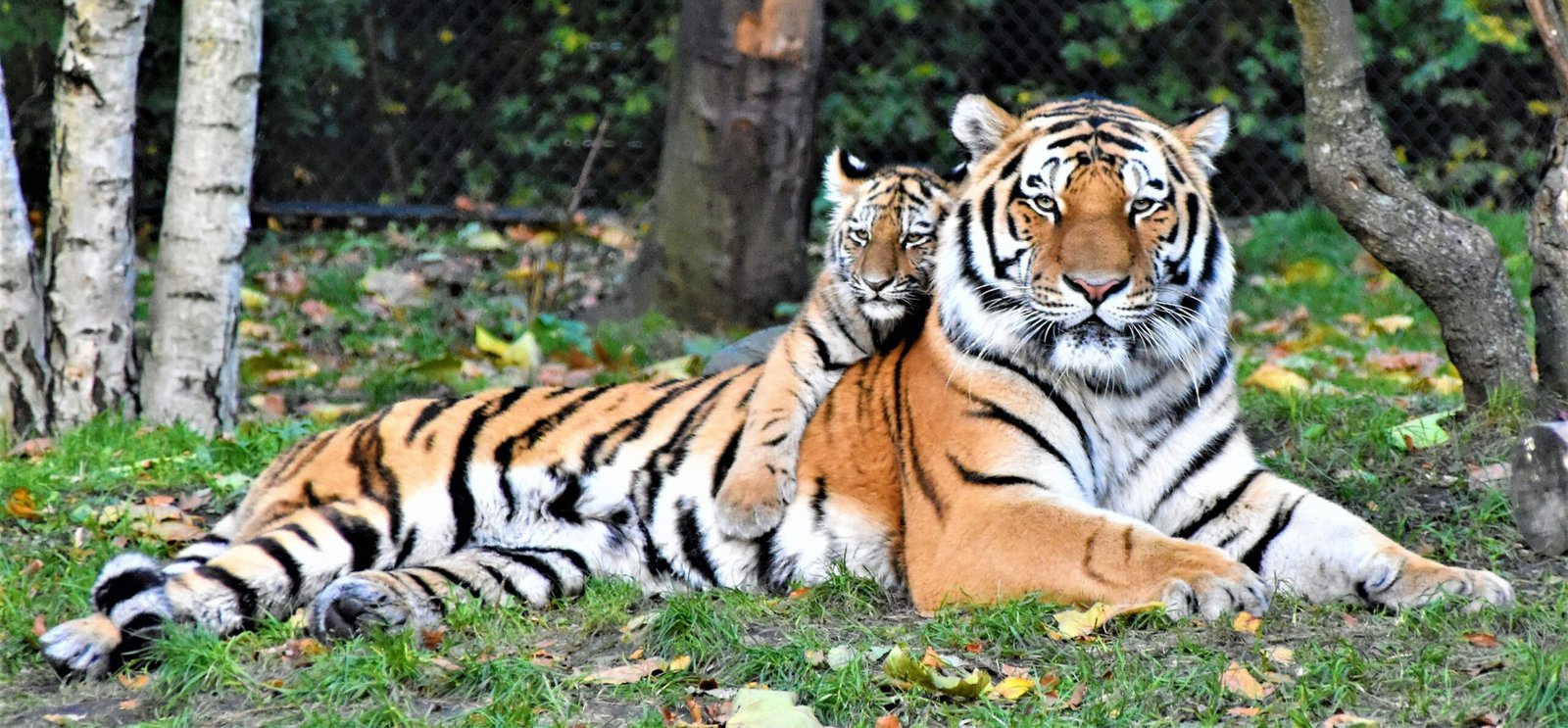
Project Tiger and TX2 Goal are important programs for the conservation of tigers in India and in other countries with tiger populations.
Project Tiger is a large-scale program being run by the Government of India for tiger conservation. Tiger likes to live in dense forests away from humans. This bright-eyed animal is the pride of the forest.
It depends on hunting animals for food and is the highest-level predator in the food chain prescribed by nature. It protects biodiversity and preserves nature by living in the forest.
In the last few years, the existence of tigers has been endangered due to various reasons. To save nature, it is necessary to save tigers. Therefore, the Government of India is working seriously for tiger conservation.
However, many countries where tigers are found are also working for tiger conservation under the TX2 Goal program.
In this article, you will get complete information about the Project Tiger and TX2 Goal program.
India is home to many diverse and beautiful animals, including tigers. In an effort to protect this amazing species, the Indian government launched Project Tiger in 1973.
Here’s everything you need to know about this important initiative.
History of the Tigers
The oldest fossil of the tiger has been found in northern China and Java (Indonesia). This fossil is said to be about 2 million years old.
Based on these fossils, the history of the tiger is believed to be about 2 million years old.
What are the challenges before the tigers?
There was a time when tigers were found in abundance throughout the continent of Asia.
They were spread from the Far East Korean Peninsula to far West Turkey.
But in recent years, due to massive urbanization and expansion of the agricultural sector, tigers have suffered huge losses.
About 95 percent of their habitat has been destroyed due to deforestation.
Now even the 5 percent of their houses left are no less at risk. Experts predict that in the near future, about half of these surviving habitats (about 43%) will soon be destroyed.
However, countries like India have done commendable work in the direction of saving tigers.
In India, huge investment has also been made in their protection under the Project Tiger program started by the Government of India about 50 years ago.
But even after all these efforts, there is a danger to their habitats.
For a long time, tigers have been hunted for their fur and their organs. Their organs have been considered to be a valuable source of medicine.
In more recent history, tigers have been endangered due to habitat loss and hunting.
However, conservation efforts have helped to improve the population of tigers in the wild.
Today, there are an estimated 3,890 tigers living in the wild. While this number is still far below the historic population of 100,000 tigers, it is a significant increase from the low point of 1,000 tigers that existed in the 1970s.
Thanks to conservation efforts, the History of the Tigers is one that is slowly being rewritten.
Read Also: Top 10 Best National Parks in India
What are Project Tiger and TX2 Goal?
Project Tiger
Realizing the concerns due to the rapidly decreasing population of Tigers in India, the Government of India started a tiger conservation campaign 50 years ago on 1st April 1973 under the name Project Tiger.
As a result of which today most of the tigers in the world are found in India.
Project Tiger is a large-scale conservation program that was launched by the Indian government in 1973. The goal of the project is to protect tigers and their habitats so that the species can thrive.
India has done commendable work under this campaign for the conservation of tigers and increasing their population.
According to the data released by the Hon’ble Prime Minister of India, Mr. Narendra Modi on April 9th, 2023, the number of tigers at present in India is 3167, which was 268 in 1973.
According to the WWF report, at present, there are 3890 tigers across the world. Thus more than 75% of the tiger population across the world is found in India.
Why is Project Tiger Important?
Tigers are an important part of the ecosystem. The tiger maintains its authority over a certain area of the forest and protects that area.
Trees, plants, herbs, animals of different species and water resources, etc. falling under his jurisdiction remain safe in his state. Thus he protects nature.
They help keep populations of other animals in check by preying on them.
If tiger populations were to decline too much, this would lead to an increase in the population of animals that tigers prey on, which could have a negative impact on local ecosystems.
In addition, tigers are a popular tourist attraction, so protecting them is important for the economy as well as the environment.
How Does Project Tiger Work?
Project Tiger consists of many different components, all of which work together to protect tigers and their habitats.
One important part of the project is tiger reserves, which are areas of land where development work is strictly prohibited or limited in order to create a safe haven for tigers.
Initially, Project Tiger was launched with 9 tiger reserves spread over an area of 18,278 square kilometers. Presently, India has 54 tiger reserves spread over 75,000 square kilometers.
In addition to establishing tiger reserves, Project Tiger also works to engage local communities in conservation efforts.
For example, the project employs villagers as part of its anti-poaching efforts.
Villagers are also given financial incentives not to develop their land, as this can lead to habitat loss for tigers.
TX2 Goal: Global efforts for the conservation of the Tiger
What is the TX2 Goal?
The TX2 goal is a global commitment to double the wild tigers in the world by 2022.
The goal was first proposed at the 2010 Tiger Summit in St. Petersburg, Russia.
For the first time, at Saint Petersburg, 13 countries having a tiger population came together with a collective approach to double the number of tigers upto the year 2022.
TX2 means Tiger Times 2.
It has been endorsed by over 50 governments and organizations.
The TX2 goal is an important step in the direction of the getting increase of the number of tigers worldwide.
Through this project, all those countries where tiger ranges are found together have started paying special attention to tiger conservation.
By achieving the TX2 goal, the world can make sure that future generations will be able to enjoy these magnificent animals in the wild.
When was TX2 started?
The TX2 project was launched in 2010 with the goal of doubling the world’s tiger population to 6000. The project is a collaborative effort between governments, NGOs, and private sector entities.
The main objectives of the TX2 project are to
- Improve data collection and management.
- Identify threats and prioritize conservation actions.
- Increase public awareness and engagement in tiger conservation.
- Enhance partnerships and funding for tiger conservation.
TX2 goal: St. Petersburg Declaration on Tiger Conservation
On November 23, 2010, the following 13 countries with tiger populations met in St. Petersburg, Russia for the Third Asia Ministerial Conference on Tiger Conservation.
- Bangladesh
- Bhutan
- China
- Cambodia
- India
- Indonesia
- Laos
- Malaysia
- Myanmar
- Nepal
- Russia
- Thailand
- Vietnam
The goal of the conference was to double the number of wild tigers by the year 2022, in accordance with the goal of the Global Tiger Recovery Program.
In order to reach this goal, the 13 participating countries committed to a range of actions, including strengthening law enforcement to crack down on poaching and trafficking, increasing investment in tiger conservation efforts, and involving local communities in conservation efforts.
The 13 countries also agreed to establish a Tiger Range Countries Fund to provide financial support for tiger conservation. With political will and investment from all 13 countries involved, there is hope that the wild tiger population will start to rebound in the next few years.
Why should we save the tiger?
There are several reasons, why the conservation of tigers is very important. Some of them are as follows.
- Tigers maintain ecological balance.
- They save the forests.
- They save natural resources.
- They save endangered species.
- They have cultural significance.
- They provide employment opportunities to many people.
- They contribute to the economic progress of the country.
Let us understand the importance of tigers in detail.
How do Tigers maintain ecological balance?
Tigers are extremely important to maintain ecological balance because of their role as top predators.
They help keep the populations of their prey animals in check, which in turn helps to prevent overgrazing and other types of environmental damage.
Tigers maintain the food chain prescribed by nature. Thus they maintain the ecological balance.
How do Tigers save the forests?
You know that green areas are needed all over the world to protect the environment. According to globally established standards, each country must have at least one-third of its total land in the form of green areas.
But to meet the needs of the growing population across the world, the agricultural sector and urbanization are expanding. Due to this forests are being reduced.
But human intervention in areas reserved for the tiger becomes restricted. Illegal cutting of forests stops. Due to this, the forests get a chance to develop.
Therefore, it is said that tigers are effective protectors of forests because they keep people from illegally cutting down trees.
People will often avoid cutting down trees near tiger habitats, knowing that tigers may attack if they damage their territory.
Additionally, tigers play an important role in the ecosystem by regulating the populations of prey species.
When tigers disappear from a forest, deer and other prey animals can be overpopulated there, and damage the forest.
Thus, tigers help to conserve forests not only by regulating prey populations but also through their mere presence as a deterrent to illegal logging.
How do Tigers save natural resources?
Forests
Forests are a great treasure of nature. Forests flourish only where the land is fertile and there is abundant groundwater available. Mountains, rivers, springs, ponds, etc. are present.
Precious trees, vegetation, and medicinal herbs are found in the forests.
Many types of such plants are found there, from which domestic spices, medicines, and various products are made.
Thus forests help in the economic development of the country. As you know, due to human intervention in the last years there has been a huge loss of forests.
But tiger-protected areas are free from human intervention. Due to this, trees, plants, herbs, etc. are also protected there.
Water Sources
Water scarcity is one of the biggest problems in the world at present. You know that only 2.5 percent of the total water available on planet Earth is potable.
The distribution of water resources has been a cause of tension in the countries of the world.
Fortunately, the world’s 9 largest waterfalls are found in different tiger-protected areas.
These watersheds cover an area of about 5 million square kilometers. And fulfill the water requirement of about 830 million population. They provide water for drinking, agriculture, and industrial use.
For example, we will tell you about some of the major watersheds found in tiger-protected areas in Asian countries.
These watersheds are located in various tiger ranges and serve as a major water resource to the vast population of the respective countries.
Thailand
The Dong Phayayen-Khao Yai Forest Complex is a great watershed situated in Thailand.
It provides water supply to the country’s five major rivers.
These rivers are
- Nakhon Nayok River
- Prachin Buri River
- Mun River
- Muskil Lek River
- Lamta Khong River.
Malaysia
The Central Forest Spine (CFS) of Peninsular Malaysia is a major landscape consisting of four main forest complexes in Malaysia.
It provides water supply to about 90 percent of the country’s population.
It is very important for fulfilling the water requirements of Malaysia.
India
India’s Jim Corbett National Park, which is a major part of the great Ramganga river falls, alone fulfills the requirement of drinking water for the city of New Delhi, the capital of India.
Apart from this, about more than 100 million people of India living in its 9 different states get water from the Western Ghats. These Western Ghats contain 6 tiger protected regions.
Thus we find that the tiger-protected regions protect various types of natural resources including water resources.
How do tigers save endangered species?
Tigers play an important role in the conservation of endangered species.
Tiger ranges are reserved for tigers. Therefore, animals of different species are protected from poaching while living there.
In fact, the tiger reserve is not only the habitat of tigers but also the shelter of thousands of species of flora and fauna.
There are many types of species of animals that are under threat because of launching and they need conservation.
The tiger reserve provides the conservation of endangered species.
Tigers serve as an “umbrella species” – meaning that their preservation is essential for protecting other species in the ecosystem as well.
According to a study by the WWF (World Wildlife Fund), many threatened species of animals find protection in tiger reserves.
Some of the major species among them are as follows
Asian Elephants
About 30 percent of the population of Asian Elephants is protected by tigers in the following tiger ranges of different countries.
One-Horned Indian rhinoceros
One-Horne Indian rhinoceros is under extreme threat. According to estimates, about three-fourths of the world’s rhino population has shrunk to the jungles of India and Nepal.
Fortunately, about two-thirds of the world’s rhinos are still protected in India’s Kaziranga National Park. Kaziranga is a world-famous national park for the one-horn rhinoceros.
This is a tiger reserve located in the Brahmaputra Valley, Assam, India.
Sumatran rhinoceros
The Sumatran rhinoceros is probably the world’s most threatened species.
At present, it is confined to some tiger-protected areas located in Sumatra, Iceland, and Indonesia.
Now whatever is left, they are also safe due to being in the tiger reserve of Sumatra.
Apart from the above, many endangered species of animals like brown bears, snow leopards, clouded leopards, red pandas, etc. get protection in tiger-protected areas.
It is clear that tiger reserves not only provide protection to tigers but also provide protection to many types of animals, insects, reptiles, birds, etc.
Cultural Significance of the Tiger
is a culturally significant animal in many countries in Asia, including India, Bhutan, Cambodia, Nepal, and Sri Lanka.
The tiger is given special importance among Hindus. In Hinduism, Goddess Durga is considered to be the goddess of power.
Goddess Durga is a symbol of life energy in this pastoral world. Without life energy this world is lifeless. It is believed that Goddess Durga rides a tiger.
Hence the tiger is shown along with Goddess Durga. Thus the tiger is given a lot of respect in Hinduism. It is considered a symbol of power and strength.
Bhutanese culture regards the tiger as a symbol of wisdom and good fortune, while in Cambodian folklore, the tiger is often portrayed as a guardian spirit.
In Nepal, the tiger is seen as a protector of the Himalayan mountains, and in Sri Lanka, the tiger is revered as a symbol of courage.
Tigers have also been important in art and literature throughout Asia, appearing in numerous myths and legends.
The tiger is a popular motif in the Buddhist art of China and Japan.
As such, the cultural significance of the tiger is wide-ranging and deeply ingrained in the region’s history and traditions.
Apart from being culturally important in many countries of Asia, the tiger also has the distinction of being the national animal in many countries.
The tiger has the status of a national animal in India, Bangladesh, Malaysia, and South Korea.
How do Tiger reserves provide livelihood opportunities?
Tiger reserves offer a wide range of livelihood opportunities to nearby residents.
Jobs include forest guards, anti-poaching informants and trackers, village-level resource persons, data collectors, office staff, and field assistants.
In addition to providing much-needed jobs, tiger reserves also bring in tourism revenue which can be used to improve the local economy.
Tiger reserves provide an important source of income for many rural communities and are therefore vital to their long-term sustainability.
By creating employment opportunities and generating tourism revenue, tiger reserves make a significant contribution to the conservation of tigers and their habitats.
How do Tiger reserves contribute to the economic progress of the country?
Tiger reserves have a lot of natural resources including various types of valuable trees, plants, mediational herbs, spice plants, and watersheds.
We get different articles from the jungles and make useful articles from them for trading.
Thus these articles found in jungles play an important role in the economic development of the country.
The major articles we get from forests
- Food plants
- Medicinal herbs
- Timber
- Fibers
- Paper and pulp
- Oils
- Gums and resin
- Dyes
- Water
In Addition to the above, Tiger reserves also help in the development of tourism which is an important source of revenue for the country.
Tiger reserves are in different parts of the country and they attract tourists from all over the world.
Tiger reserves are helpful in reducing the effect of climate change.
Climate change is a burning problem of the present time. Carbon emissions are primarily responsible for climate change.
We know that trees absorb carbon dioxide and return fresh oxygen to us in return.
Thus trees play a very important role in reducing the harm caused by greenhouse gases.
Dense forests are the habitats of tigers. The presence of tigers motivates governments to protect the forests from illegal cutting of the forests.
A healthy forest absorbs a good amount of carbon dioxide. Thus forests are very helpful in reducing the harms caused by carbon emissions.
Studies show that the loss or degradation of forests has a significant impact on climate change.
It is found that in countries where forests have been reduced, the percentage of carbon emission remains higher.
It is clear that tiger reserves play a significant role in the mitigation of climate change.
Conclusion
Undoubtedly India has done a great job in the direction of the conservation of tigers by starting the tiger project fifty years ago.
The tiger had once almost disappeared from India. But due to the tireless efforts of the Government of India, there are 3167 tigers in India at present.
India has the distinction of being the country with the largest number of tigers in the world. India is home to 75% of the world’s tiger population.
Apart from India’s Project Tiger, the collective effort of 13 countries in the form of the TX2 goal program is also a commendable effort for the conservation of tigers across the world.
However, countries like India, Nepal, and Bhutan have done very well under the TX2 program.
But many countries are still lagging behind the target. Therefore, much remains to be done in this direction.
Conservation of tigers helps in the protection of forests, endangered species of various animals, and natural resources.
Tiger reserves are helpful in providing livelihood opportunities to various people.
At the same time, they contribute very significantly to the economic development of the country.
The conservation of tigers is really the conservation of nature on Earth.
It is very important to save nature for future generations.
By running programs for the conservation of tigers, we are not only saving the tiger but also saving nature for the generations to come.
We extend our heartfelt thanks to the Ministry of Environment, Forest and Climate Change of India and WWF (World Wildlife Fund), as we have taken some valuable data from them for this article.
