


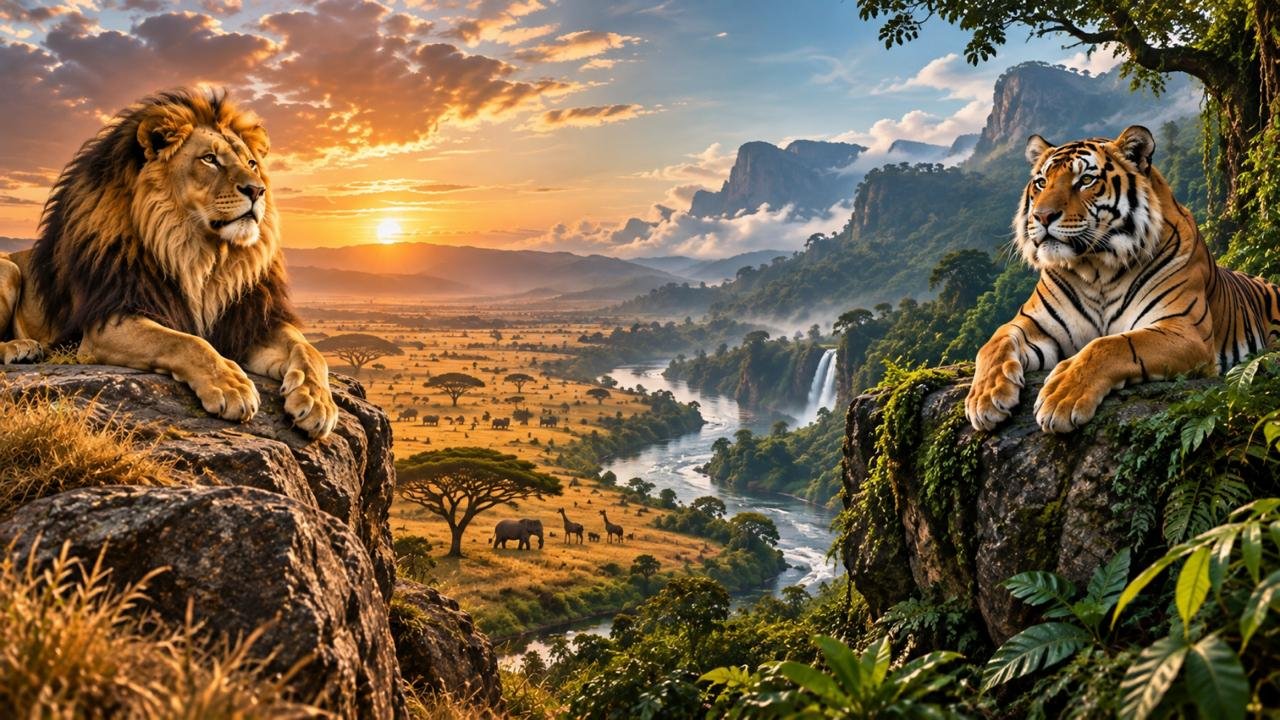
When we were children, our elders often told us stories about animals. In many of those stories, the lion was presented as the king of the jungle.
A powerful face, a magnificent mane, and a roar that could make the whole jungle tremble. That was the image of the lion we grew up with.
But the tiger was no less impressive.
According to a funny story we heard as children, one day the tiger learned that the lion called himself the king of the jungle.
The tiger was furious.
“Yes, I have heard that the lion calls himself the king of the jungle. But why does he call himself the king of the jungle? He does not even live in dense forests. I am the one who lives in dense forests.”
“And what about hunting?”
“The lion does not even hunt alone. His entire family is with him. I hunt on my own strength. So, I am the real king of the jungle.”
The lion eventually heard what the tiger had said and replied:
“The tiger hunts animals of different sizes, but I take on large and powerful prey. I have a family. My entire pride lives and moves together.”
“A single roar of mine makes the entire forest tremble.”
“I have all the qualities of a king.”
“So, I am the true king of the jungle.”
So, who is really the king of the jungle—the lion or the tiger?
This is not a new question.
From ancient civilisations to modern wildlife documentaries and today’s social media debates, humans have repeatedly tried to find an answer.
Over time, countless stories, myths and cultural symbols have become associated with this question.
But is the lion really the king of the jungle?
Let us first understand how the lion acquired this royal image.
The Glorious History of the Lion
The lion’s royal image is not the creation of any single civilisation.
Thousands of years ago, lions were not limited to Africa. Their natural range extended across parts of southeastern Europe, the Middle East and India.
In many of the civilisations where lions were known, the lion gradually became a symbol of power, courage, royalty and dominance.
Almost every major ancient civilisation gave the lion a place of great importance.
Egypt
In ancient Egypt, the lion was closely associated with royal authority and divine power.
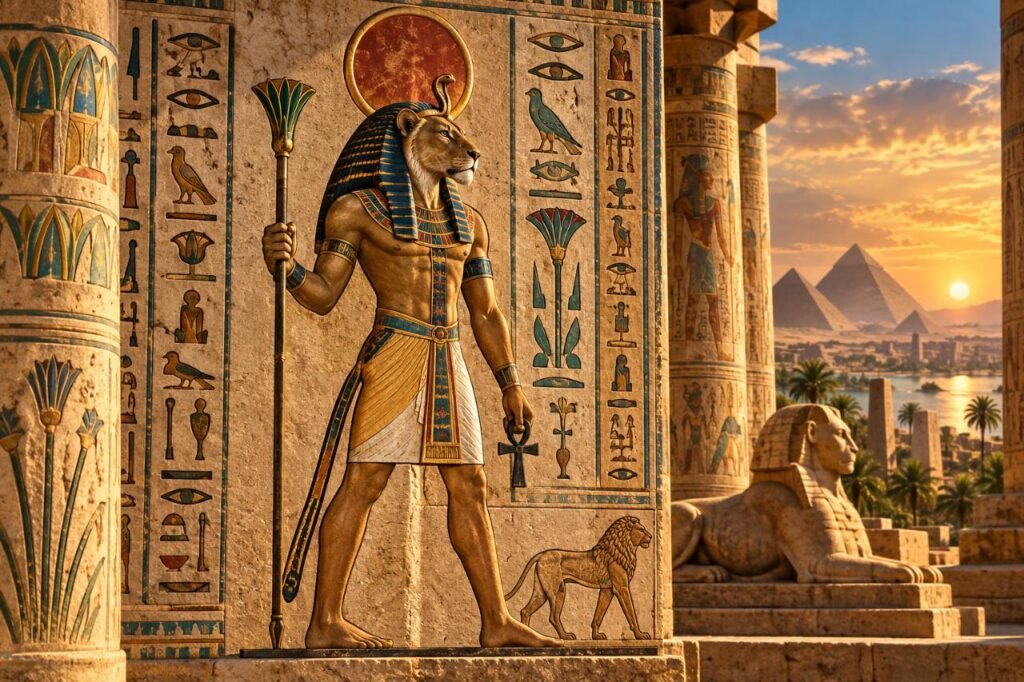
The Great Sphinx of Giza, built around 4,500 years ago, has a human head and the body of a lion. It was associated with royal power and symbolism.
The Egyptian goddess Sekhmet was also depicted as a woman with the head of a lioness. She was associated with power, war, and protection.
Mesopotamia
The lion was also a symbol of royal power and strength in Mesopotamia.
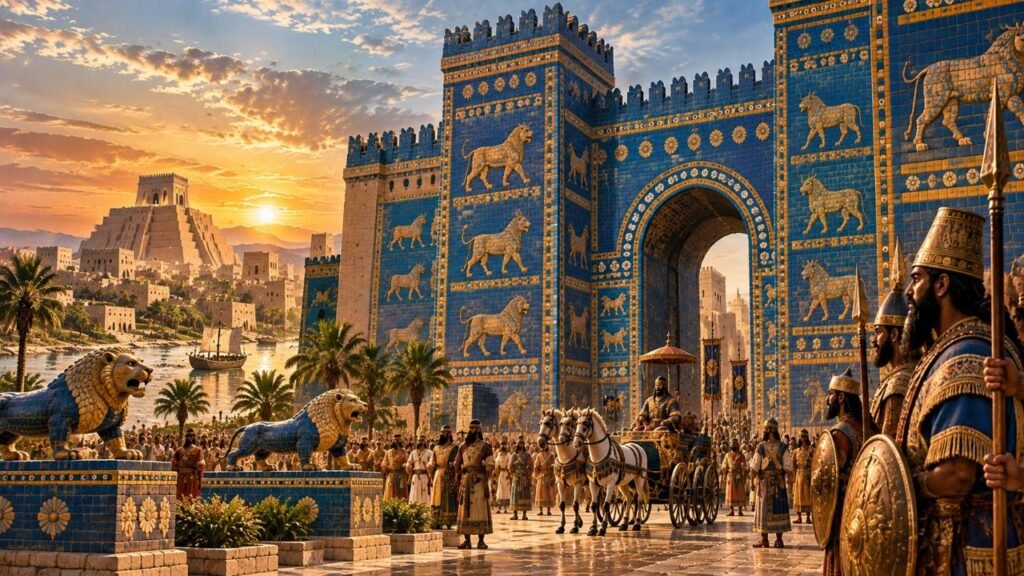
The famous Ishtar Gate of Babylon was decorated with figures of lions. Assyrian kings regarded lion hunting as a demonstration of royal power and bravery.
The lion was no longer seen merely as an animal. It had become a symbol of the king’s power.
Persia
Lions also appeared in the symbols and artworks of the Achaemenid Persian rulers.
The lion was associated with royal authority, strength, and sovereignty.
Greece and Rome
The lion held a powerful place in the imagination of ancient Greece.
In Greek mythology, the first of Heracles’ twelve Labours was to kill the Nemean Lion – a monstrous creature that seemed almost impossible to defeat.
Its hide could not be pierced by ordinary weapons, making the lion virtually invincible.
Heracles first tried to bring down the lion with his arrows, but they could not pierce its invulnerable hide.
He then struck it with his club, but even that failed to wound the beast.
Finally, he confronted the lion with his bare hands and strangled it.
After killing the lion, Heracles removed its hide and wore it as armour. The skin of the Nemean Lion later became one of his most recognisable symbols.
(Source: Perseus Digital Library)
The story was more than a tale of a hero killing a dangerous animal. The Nemean Lion became a symbol of an almost unbeatable force of nature – and of the extraordinary strength required to overcome it.
Centuries later, as Roman civilisation rose around the Mediterranean, the lion continued to occupy a powerful place in the ancient imagination. But in the Roman world, the animal also became closely associated with public spectacle and the arena.
One of the best-known stories from this tradition is Androcles and the Lion.
According to the story, Androcles, a runaway slave, takes refuge in a lion’s den. When the lion returns, it does not attack him. Instead, it stretches out its paw towards him. A large thorn is lodged in it.
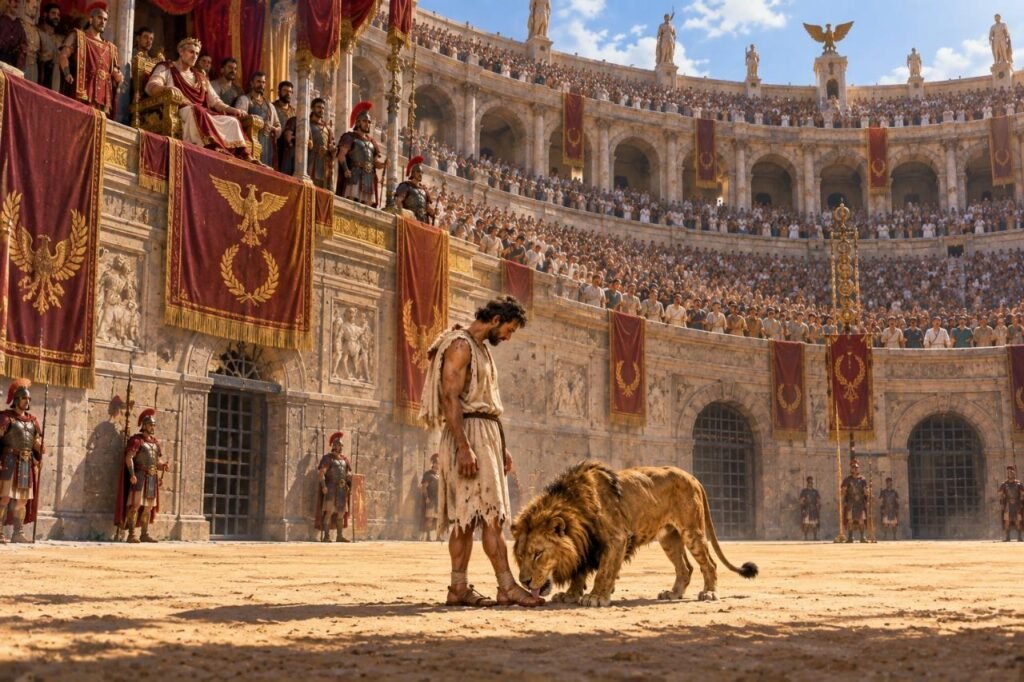
Androcles removes the thorn, freeing the wounded animal from its pain.
Later, Androcles is captured and condemned to face a lion in an arena. By a remarkable twist of fate, the lion brought before him is the very same animal he had helped.
The lion recognises him.
Instead of attacking, it approaches Androcles and begins licking his feet.
The story transforms the image of the lion once again. It is no longer merely a symbol of strength and danger, but also of gratitude, memory and loyalty.
The tale survived for centuries and later inspired George Bernard Shaw’s famous play “Androcles and the Lion”, written in 1912.
(Source: Wikipedia)
Lion of Judah
The lion’s royal symbolism also has deep roots in Jewish and Christian traditions.
In the Hebrew Bible, Genesis 49 compares Judah to a lion. In later Jewish and Christian traditions, the “Lion of Judah” became an important religious symbol.
In Christian tradition, the same symbol also became associated with Jesus Christ.
The lion thus came to represent power, royalty, and religious symbolism at the same time.
Europe: A Symbol of Kings
According to ancient Greek writers, wild lions were still present in Greece around 480 BCE.
In later European heraldry, the lion became one of the most prominent symbols on the coats of arms of royal families, kingdoms and warriors.
From royal palaces to shields and flags, the lion appeared again and again.
The lion’s image as a “king” was therefore not created by the jungle alone.
Humans created it by associating the lion with kings and royalty.
The Lion in India
In India, too, the lion has long been associated with power and religion.
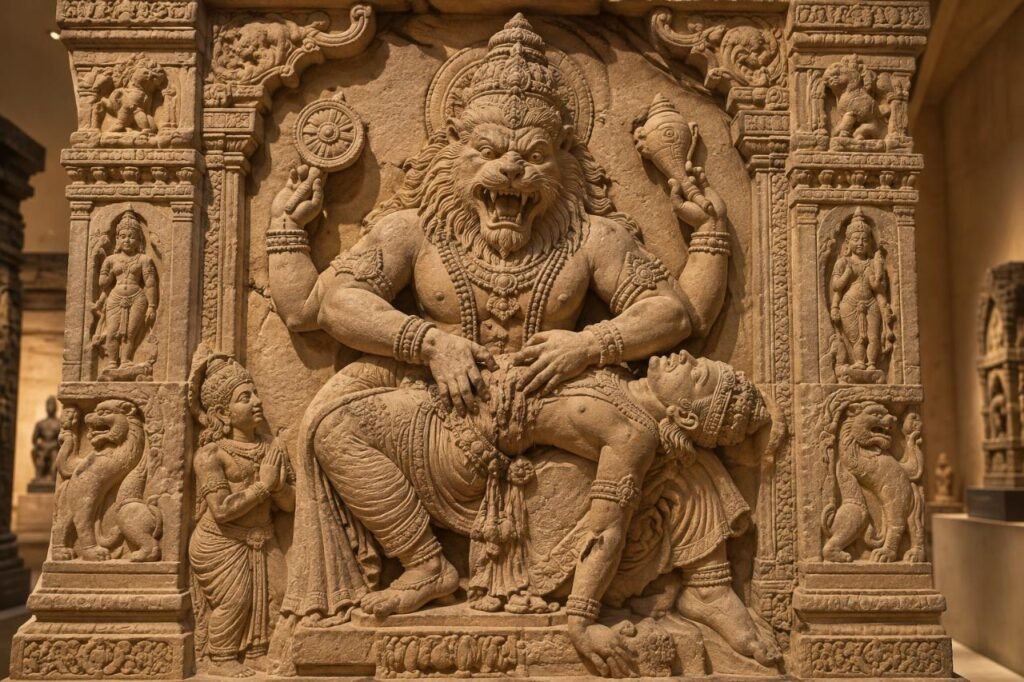
In Hindu Puranic tradition, Lord Vishnu took the form of Narasimha to protect his devotee Prahlada. Narasimha had the body of a human and the head of a lion.
Lord Vishnu is regarded by Vaishnava traditions as the Supreme God, and Narasimha is considered his fourth avatar.
The lion is also traditionally associated with Goddess Durga as her mount, although in some regional traditions, Durga is also depicted riding a tiger.
Thus, in India as well, the lion was never merely a wild animal. It became a symbol of power and divine protection.
Across civilisations such as Egypt, Mesopotamia, Persia, Greece, Rome and India, the lion’s association with religion and royalty played an important role in creating its global image as a “king”.
But this raises another question –
Is the story of the tiger really so different?
The Glorious History of the Tiger
The story of the tiger is different.
The tiger has always been an Asian animal, ranging from the Russian Far East to South and Southeast Asia.
But wherever it lived, its status was hardly less than that of a king.
China
In traditional Chinese culture, the White Tiger is one of the Four Celestial Animals.
It is associated with the west, power, and military strength.
Compared with the lion, the tiger was traditionally regarded in China as the more powerful wild animal.
This is why the tiger is sometimes portrayed in Chinese cultural tradition as the “King of Beasts.”
Korea
The tiger has also held an important place in Korean folklore.
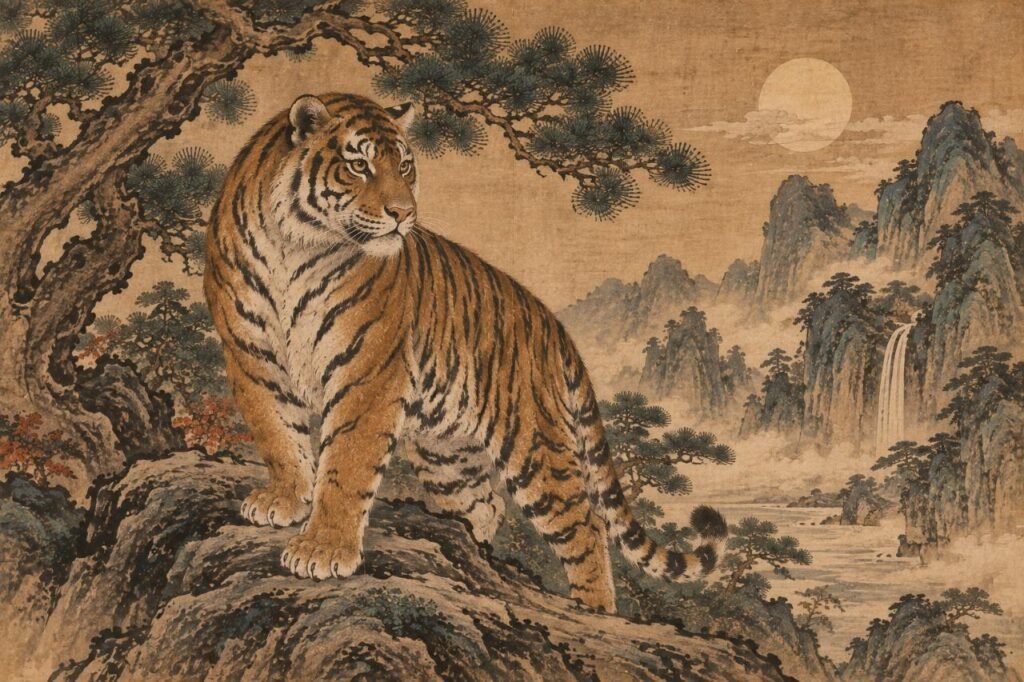
Sometimes it appears as a powerful character associated with justice. At other times, it is portrayed as powerful yet humorous and somewhat naive.
In other words, in parts of Asia, the “king of the jungle” was not the lion, but the tiger.
India
In India, the tiger has long been a symbol of strength, courage and sovereignty.
Tipu Sultan, the ruler of Mysore, gave tiger symbolism an important place in his political identity. The tiger became closely associated with his rule and his resistance against the British.
During Tipu Sultan’s time, a mechanical automaton was created showing a tiger attacking a European soldier. It became known as “Tipu’s Tiger” and is now preserved at the Victoria and Albert Museum in London.
It is regarded as a famous symbol of Tipu Sultan’s tiger imagery and his opposition to the British.
The folk traditions of the Sundarbans also reflect cultural beliefs associated with the tiger through the stories of Bonbibi and Dakshin Rai.
In these stories, Dakshin Rai is portrayed as a powerful figure associated with the forest and the tiger, while Bonbibi is a guardian deity who protects people entering the forest.
And in modern India, the tiger holds the status of the National Animal.
In other words, the tiger has its own royal legacy.
The difference is simply that the lion’s royal image was shaped by civilisations across several continents, and Western popular culture later carried that image to the rest of the world.
For centuries, literature and popular culture continued to strengthen this older image.
The tiger, on the other hand, developed its royal image mainly within the cultural world of Asia.
Lion and Tiger in Hollywood Movies
Hollywood has also played an important role in shaping the popular image of lions and tigers.
It has kept this old cultural idea alive through stories, giving the two great cats very different personalities.
Think of Aslan from The Chronicles of Narnia – an ideal king: brave, compassionate and just, willing to sacrifice himself for the good and salvation of others.
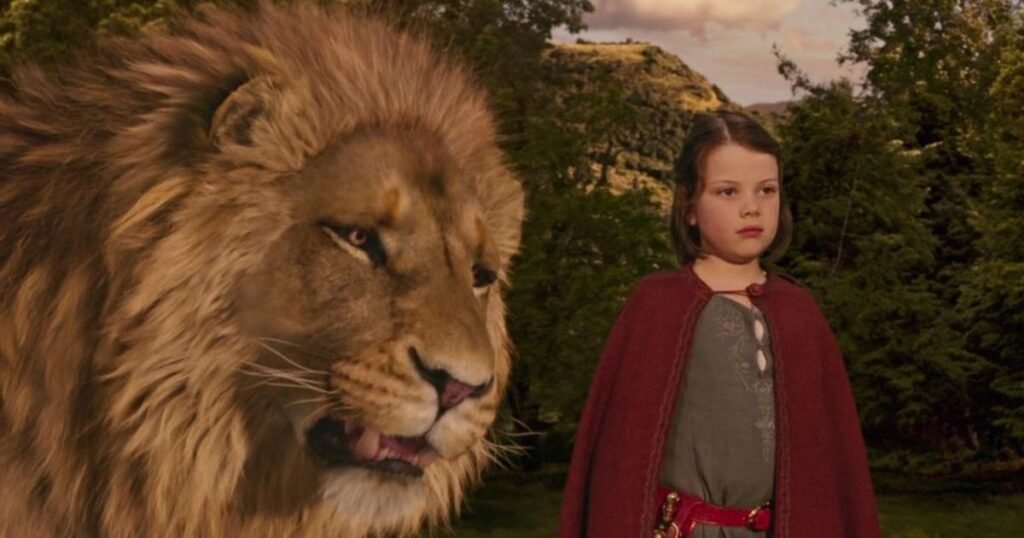
On the other hand, Shere Khan from The Jungle Book appears as a symbol of power, fear and dominance.
Through one, we see the image of a noble and compassionate king; through the other, we experience the power and fear associated with the supreme authority of the forest.
Behaviour, Lifestyle and Hunting
Now, let us leave cultural symbolism behind and step into the real jungle.
Because the lifestyles of lions and tigers are quite different.
And these differences make the “King of the Jungle” debate even more interesting.
Size and Strength
The tiger can generally be longer and heavier than the lion and is considered the largest living cat species in the world.
However, there is considerable variation in size between different populations and individual animals of both species.
Large male tigers, in particular, can reach an impressive size.
Social Structure
The lion is unusual among the big cats because of its highly social lifestyle.
Lions live in prides that may include several females, their cubs and a number of adult males.
The tiger, in contrast, is generally a solitary and territorial animal.
An adult tiger usually establishes and defends its territory on its own.
In a way, it can be said:
Lion rules with pride. Tiger rules alone.
Hunting
Lionesses often hunt together, and coordination is an important part of group hunting.
However, this does not mean that lions never hunt alone.
The tiger, on the other hand, is a solitary hunter. It often uses vegetation and terrain as cover to approach its prey before launching a sudden ambush.
And here is an important point—
The tiger is not a hunter of small animals alone.
It can prey on deer, wild boar and, in some regions, large ungulates such as gaur.
Therefore, it is more accurate to describe the tiger as an extremely powerful solitary predator.
Natural Habitat: Who Is the Real “Jungle King”?
When it comes to natural habitats, the debate over who is truly the king of the jungle becomes even more interesting.
Lions are mainly associated with savannas, grasslands, scrublands and open woodlands.
They are not typical inhabitants of dense, closed-canopy tropical forests.
Tigers, in contrast, occupy a wide range of habitats, including forests, grasslands, wetlands and mangroves. They are particularly well adapted to moving and hunting under the cover of dense vegetation.
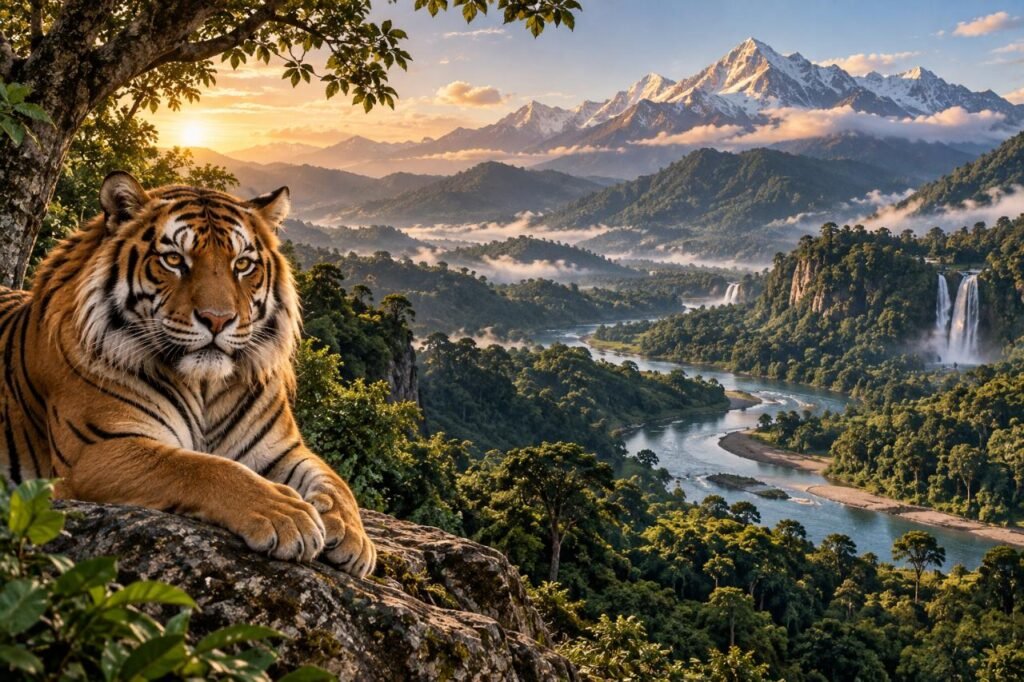
Therefore, if the term “King of the Jungle” implies establishing sovereignty over dense forests, then the tiger’s claim is certainly strong.
However, the lion is also a powerful predator of the open grasslands.
So, which of the two is actually more powerful?
Let us look at the natural strengths of both animals and see where each one has an advantage.
Lion vs Tiger: Comparison at a Glance
| Dimension | Lion | Tiger | Whose Position Is Strong? |
|---|---|---|---|
| Body Size | Large | Generally larger | Tiger |
| Body Weight (Male) | About 150–190 kg | About 180–260 kg in large populations | Tiger |
| Body Length | About 2.5–3.3 m | About 2.7–3.9 m | Tiger |
| Canine Teeth | About 7–8 cm | About 7.5–10 cm | Tiger |
| Claw Length | About 4–5 cm | About 8–10 cm | Tiger |
| Physical Strength | Extremely powerful | Extremely powerful | Almost Equal |
| Large Prey Hunting | Can bring down large prey, often with the pride | Can bring down large prey alone | Almost Equal |
| Social Organisation | Lives in prides | Usually lives alone | Lion |
| Roar | Can carry about 8 km | Can carry about 4 km | Lion |
| Swimming | Capable swimmer | Excellent swimmer | Tiger |
| Royal Appearance | Mane, powerful face and majestic presence | Striking and powerful appearance | Lion |
| Royal Symbolism | Strongly associated with kings and royalty across many civilisations | Strong royal symbolism, especially in Asia | Lion |
How Did the Title “King of the Jungle” Become Associated with the Lion?
The comparison table above presents an interesting picture.
From a biological perspective, the tiger generally has the advantage. It can be longer and heavier than the lion, has larger claws and canines, and is an exceptionally powerful predator in its own right.
Yet for centuries, across many civilisations, humans have imagined the lion as the King of the Jungle.
Why?
The answer does not lie in biology alone.
The lion did not become a “king” because nature handed it that title. The title was created by human imagination, and strengthened over thousands of years through culture, religion, history and literature.
From ancient India and Egypt to Mesopotamia, Persia, Greece and Rome, the lion became associated with royalty, power, courage and divine authority.
European heraldry later carried this image forward, placing lions on the coats of arms of kings, kingdoms and noble families. Literature, paintings, and eventually cinema and Hollywood, carried the same image to audiences around the world.
But culture alone does not explain everything. The lion itself carries certain features that set it apart, quite naturally, from every other big cat.
The magnificent mane of an adult male lion is the most obvious of these. It frames the face almost like a natural crown, giving the lion a visual presence unlike any other big cat.
Then there is the roar. A lion’s roar can travel several kilometres across open landscapes, and under favourable conditions, can be heard from a considerable distance. To an ancient observer, hearing such a powerful sound rise from an unseen animal must have been an extraordinary, almost unforgettable experience.
The lion’s social life may have played its part too. Unlike most big cats, lions live in prides – raising their young together, defending territory as a group, often hunting as one. To early humans, watching their own social instincts mirrored in another species may have felt strangely familiar.
Over generations, all these impressions blended into a single image: a powerful animal, with a magnificent appearance, a thunderous roar, a family to protect, and a bearing that seemed to carry authority wherever it went.
Modern zoology, however, tells us a fuller story. The tiger is no less extraordinary – generally larger and heavier than the lion, capable of hunting large prey entirely on its own, and beautifully adapted to the forests, wetlands, and grasslands of Asia.
In many Asian cultures, the tiger has held its own place as a symbol of strength, courage and authority.
So if the tiger carries so many of the very qualities we associate with power, why did the lion capture the human imagination so completely?
Perhaps there are a few more reasons.
1. The Lion We Knew May Have Been Different
The lions known to ancient civilisations were not necessarily identical to the lions we see today.
Some extinct lion populations were considerably larger than modern lions, and historical accounts of the Barbary lion – once found from Morocco to Egypt, and among the very lions taken to Rome’s gladiatorial arenas – describe it as an exceptionally large and imposing animal, crowned with an unusually thick, dark mane.
Modern zoologists debate how much of this reputation was fact and how much was legend, but the legend itself is telling: the lions that ancient Egyptians, Romans and others actually encountered may well have looked far more commanding than many lions we see today.
Ancient humans also lived far closer to the wild than we do now. Large predators still roamed landscapes that have since been reshaped by farms, roads and cities.
We cannot say for certain that size alone made humans crown the lion. But perhaps, quite simply, the lion looked every bit like one.
2. Even the Hyena Knows When the King Has Arrived
There is another suggestive piece of behaviour from the African wild.
Spotted hyenas are bold, opportunistic hunters. They can challenge a lioness, and under the right circumstances, an entire clan may even try to steal her kill.
But the moment a large adult male lion arrives, the equation changes completely — the same hyenas that press their luck against a lioness will typically retreat the instant the male appears.
An ancient observer, watching such moments unfold, may have witnessed something remarkable: an animal whose mere presence was enough to settle the matter, without a fight.
We cannot know for certain whether encounters like this shaped the “king” narrative. But perhaps the title was earned not only by what the lion could hunt, but by how every other creature around it seemed to respond.
3. Perhaps the Lion Simply Looks Like a King
And then there is something that science cannot easily measure.
Look closely at the faces of a lion and a tiger. The lion has a broad face, steady eyes, and a mane that frames its head almost like a natural crown — there is something calm, composed and authoritative in its expression.
The tiger tells a different story: intensely focused eyes, sharp facial markings, a face built for stealth and sudden violence. It looks less like a monarch and more like a solitary warrior — alert, watchful, ready to strike.
Of course, these are human impressions, not scientific facts. A lion is not inherently noble, and a tiger is not inherently menacing. But humans have always read the faces of wild animals through the lens of their own imagination.
In the lion’s face, we may see a king – calm, confident, guarding his realm. In the tiger’s, we may see a warrior – powerful, fearless, ruling through stealth rather than presence alone.
The tiger may be larger. The tiger may be heavier. Its claws and canines may be longer. Yet the lion seems to carry something that cannot be measured in kilograms or centimetres.
It simply looks like a king.
Perhaps that, as much as any biological fact, is why humans kept placing a crown on its head for thousands of years.
When Lions and Tigers Clashed in History
In the wild, encounters between lions and tigers are extremely rare.
Today, their natural geographical ranges are largely separate.
In the past, their ranges overlapped in some regions, but under normal circumstances, both predators would generally avoid unnecessary confrontation with each other.
So, there has never been a regular “Lion vs Tiger Championship” in the jungle.
But humans have brought them face to face on several occasions.
And some of these encounters have been recorded in history.
1. 1882 – A Lion-Tiger Clash in a Menagerie
In 1882, a lion and a tiger were being kept in separate wooden enclosures in a travelling menagerie.
At some point, the tiger broke through the partition and attacked the lion.
According to a contemporary newspaper account, the tiger seized the lion by the throat, and the lion died within a short time.
But this was not a controlled scientific contest.
The tiger had launched a sudden attack, and the circumstances of the encounter were unusual.
It therefore cannot be treated as proof of the overall superiority of either species.
2. 1891 – Clash in Calcutta Zoological Gardens
In 1891, a violent and unexpected encounter took place between a lioness and a tiger at the Calcutta Zoological Gardens.
The zoo’s superintendent at the time, R. B. Sanyal, recorded an account of the incident.
The lioness and tiger were kept in neighbouring compartments.
During a brief lapse in supervision, the two animals came into contact and began fighting.
The keepers tried to separate them but were unable to do so.
Eventually, the tiger seized the lioness by the neck, and she died from her injuries.
The incident is particularly notable because a contemporary zoo record of the encounter exists.
3. The Famous Gaekwad’s Baroda Encounter
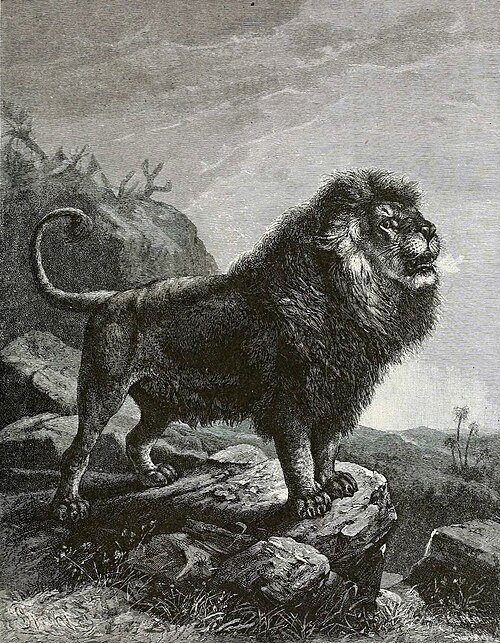
In the late 1800s, Maharaja Sayajirao Gaekwad III of Baroda arranged a remarkable encounter between a Barbary lion named Atlas and a Bengal tiger.
Thousands of spectators gathered to witness the clash between two of nature’s most powerful predators.
Then the moment came.
The two great cats were brought face to face, and a fierce battle began. Both animals fought with tremendous strength, using their claws and teeth.
But in the end, the tiger prevailed.
Atlas, the magnificent lion, could not survive his injuries and died after the battle. The tiger had won a deadly contest that had begun as a question of strength – and ended with one of the most remarkable lion-tiger encounters in Indian history.
How Much Did the Maharaja Lose in That Encounter?
In that encounter, not only did the lion lose the battle, but the Maharaja’s confidence was also lost.
The Maharaja had such immense confidence in Atlas, the lion, that he did not hesitate to stake ₹37,000 on his victory over the tiger.
Sadly, his confidence proved misplaced.
Atlas lost the fight and was killed, and the Maharaja lost the ₹37,000 he had wagered on him.
(Source: Paperzz)
To understand how extraordinary that amount was, we must remember that the rupee of that era was a silver coin. A standard British Indian rupee weighed about 11.66 grams.
The 37,000 silver coins would have weighed approximately 431 kilograms. At today’s silver prices, 431 kilograms of silver would be worth around ₹10 crore, or about US$1 million.
In other words, at today’s silver prices, the Maharaja lost nearly ₹10 crore over that lion-tiger encounter.
The Maharaja lost a considerable sum of money in the encounter.
But perhaps he paid the real price in another form – his unwavering faith in the lion’s victory.
He was certain that the lion, the King of the Jungle, would win the battle. But he had underestimated the power of the tiger.
After all, the tiger was no ordinary rival. It was a king of the wild in its own right.
The biggest question today: What kind of king is he when his own life is at stake?
People can still sit around a coffee table and debate –
Is the lion bigger than the tiger?
Which one is more powerful?
If the two ever fought, which one would win?
But in the real jungle, the question is very different.
The real question today is not who the king of the jungle is, but how the king will survive.
Will these two great cats still be part of our wild landscapes for generations to come?
Today, both lions and tigers face serious conservation challenges.
The Current Status of the Lion
The African lion is listed as Vulnerable on the IUCN Red List.
There are different estimates of the number of wild adult lions in Africa, but their current population is only a fraction of their historical distribution.
The lion has lost a large part of its historical range.
Habitat loss, declining prey populations, human-wildlife conflict and other human pressures are among the major threats facing the species.
The story of the Asiatic lion in India is somewhat better.
Once found across much of India, the lion was driven to the brink of extinction by relentless hunting and other pressures.
But thanks to lion conservation efforts and the support of local communities, the lions of the Gir landscape are once again thriving.
Their population was recorded at 891 in the 2025 census, up from 674 in 2020. This increase in their numbers is certainly a welcome sign for lion conservation in India.
However, the fact that India’s entire wild Asiatic lion population remains confined to Gujarat and its surrounding lion landscape also carries conservation risks.
The Current Status of the Tiger
The story of the tiger is not very different from that of the lion.
The tiger is still listed as Endangered on the IUCN Red List, and its survival has remained a serious conservation concern.
The gravity of the situation brought the tiger range countries together in 2010 at the Tiger Summit in St. Petersburg, Russia. The countries committed to an ambitious goal: to double the number of wild tigers across their range by 2022.
This became known as the TX2 goal.
India, home to the largest population of wild tigers, became a crucial part of this global effort. Through Project Tiger, protected areas, stronger protection measures and systematic monitoring, India has made remarkable progress in rebuilding its tiger population.
India’s tiger population increased from an estimated 1,411 in 2006 to 3682 in 2022, according to the National Tiger Conservation Authority’s latest completed nationwide assessment.
(Source: NTCA)
It is a matter of pride that India is home to the largest population of wild tigers in the world, accounting for around 75% of the global wild tiger population.
But the story does not end with these numbers. Protecting the tiger means protecting its forests, prey, corridors and the fragile balance between wildlife and people.
The philosophy of Kailash Sankhala, the pioneer of Project Tiger, captures the real challenge of tiger conservation:
“It is easy to kill a tiger, but difficult to save one. To save a tiger, we have to save the whole forest.”
The message is simple, yet profound: saving the tiger ultimately means saving the forest that sustains it.
The more crucial Question: “Who Is the King — or How Will the King Survive?”
We again return to the question –
King of the Jungle: Who Really Deserves the Title?
Perhaps there is no single answer to this question, because both are kings in their own territories.
Lions and tigers have evolved in different habitats, each perfectly adapted to its own domain. Where their ranges overlap, they generally avoid direct confrontation rather than deliberately challenging one another.
Perhaps nature itself has given them separate kingdoms – and there is no need for either to claim the other’s throne.
Therefore, the question of who the king of the jungle is falls by the wayside. The real question is: how do we save these kings?
Truly saving a lion or tiger does not mean merely keeping it alive in a zoo. It means allowing it to live as a king in the wild, in the forests where it belongs.
And a wild king requires:
- Forests.
- Forests need rivers.
- Rivers depend on mountains and watersheds.
- Together, they form the ecosystem that sustains life.
As renowned wildlife biologist George B. Schaller once said:
“The great cats represent the ultimate test of our willingness to share this planet with other species.”
(Source: National Geographic)
Perhaps that is the real lesson behind the debate.
The answer lies not in choosing a king, but in protecting the kingdom.
Because only when the forests survive will their kings survive — and only then will their stories continue to be told.
Conclusion: Protecting the Kings of the Wild
There is a golden lesson in chess: all the pieces work together to protect the king.
Our planet is like a giant chessboard. Lions, tigers, animals, birds, rivers, mountains, and we humans are all pieces on the same board. Every piece has its place, and every piece matters.
If we call the lion and the tiger the kings of the wild, then it is our responsibility to protect them.
But what a cruel irony that we have left no stone unturned in destroying the very kings we proudly call the kings of the jungle.
Perhaps we should remember the lesson of chess – if we fail to protect our king, we will eventually lose the game.
And perhaps that is the real lesson behind the debate over who deserves the title of King of the Jungle.
We are not playing against nature. We are playing with nature.
If the kings of the wild disappear, we may eventually discover that in trying to destroy them, we were destroying the very game of life on which our own survival depends.
