


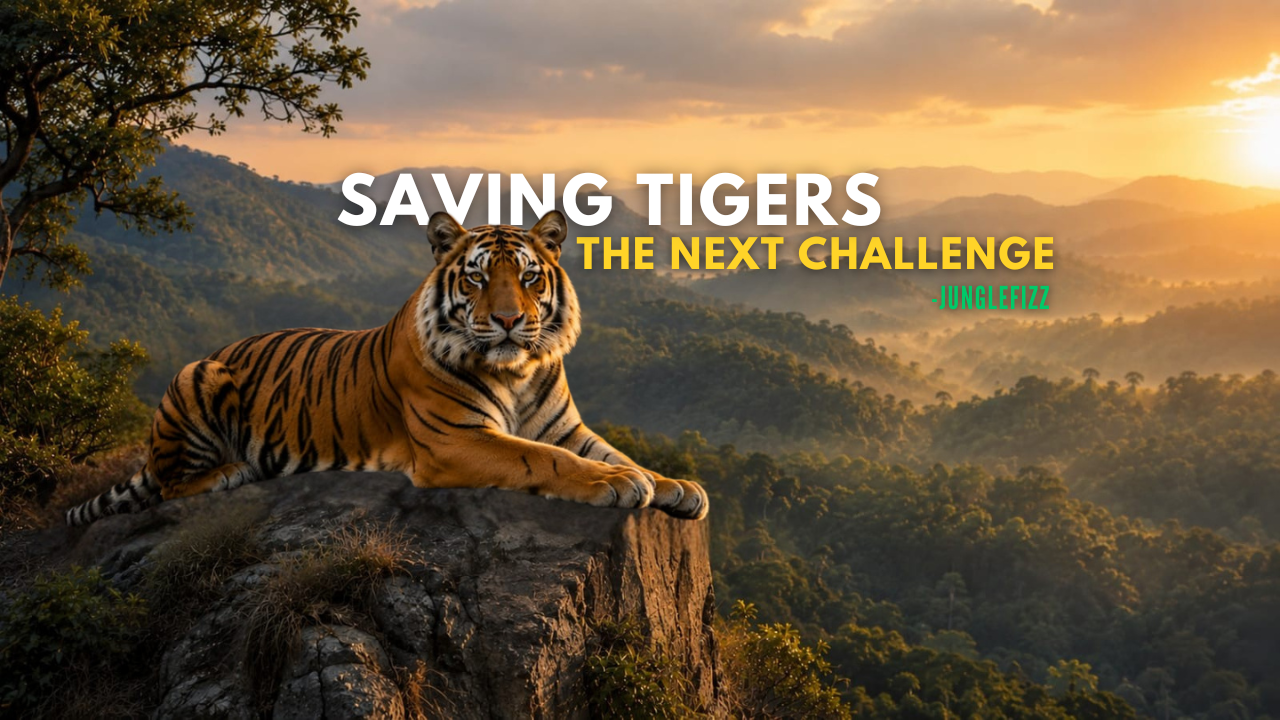
Introduction: It is very beautiful. There is something special about the shine in its eyes. Look at its face. There is pride, power, and majesty in its expression, as if it knows it rules this forest.
Its beautiful coat, marked with bold black stripes, makes it even more striking.
Yes, we are talking about the tiger.
But the tiger is not just beautiful.
It is not just another animal of the forest.
It is an important part of the forest ecosystem.
Where there is enough forest, water and prey for tigers, the whole ecosystem is likely to be healthier.
Perhaps this is why the tiger has always had a special place in the forest. In Indian tradition, it has been given the status of the king of the Indian forests.
The importance of the tiger in India is not limited to forests. It also has a special place in Indian culture.
Whether it is its connection with Goddess Durga or the tradition of Lord Ayyappa in South India, the tiger has been a part of India’s cultural memory for centuries.
But the animal we respected so much was once close to disappearing from our forests.
At the beginning of the 20th century, India was believed to have around 40,000 tigers.
Then hunting increased. Forests began to disappear. Tiger poaching and illegal trade also increased.
As a result, the first all-India tiger census in 1972 found only 1,827 tigers in India.
This magnificent animal, which once ruled the forests, was now fighting for its own survival.
And this is where the great story of saving the tiger in India began.
Tiger Roars Back
The tiger had come close to extinction. This became a matter of serious concern for the whole country.
Finally, on April 1, 1973, Project Tiger was launched.
It started with only nine Tiger Reserves. Together, they covered about 18,000 square kilometres.
Today, India has 58 Tiger Reserves. Together, they cover about 84,487 square kilometres. This is about 2.56% of India’s total geographical area.
This is a major achievement for wildlife conservation in India.
TX2 Goal
The decline in tiger numbers was not a concern for India alone. It was a concern for the whole of Asia and all tiger-range countries.
Keeping this in mind, 13 tiger-range countries came together in Saint Petersburg, Russia, in 2010.
They set a goal to double the world’s wild tiger population by 2022.
This goal was named TX2 – Tiger × 2.
India achieved this goal before the deadline. In the 2018 tiger estimation, India’s tiger population reached 2,967. This was more than double the 2010 baseline.
How Many Tigers Are There in India?
According to the latest complete All India Tiger Estimation, conducted in 2022, India had about 3,682 wild tigers.
India is home to the world’s largest wild tiger population. About 70% of the world’s wild tigers are found in India.
Tigers are also found in other countries. But their numbers are much lower than in India.
For example, Russia has around 750 Amur tigers.
Wild tigers are also found in countries such as Nepal, Bhutan, Bangladesh, Malaysia and Indonesia. But none of these countries has a tiger population close to that of India.
New Challenges: Tigers Seek More Jungles
India has made remarkable progress in increasing its tiger population.
But now we face new challenges.
Conservationists are warning us that the growing tiger family now needs more homes. Young tigers need to find territories of their own.
What? Tigers need more homes!
Really!
Here, humans are already struggling to find enough space for their own homes, and now we are being told to find more space for tigers.
And tigers cannot live in small homes.
- They need large and healthy forests.
- They need enough prey.
- They need water sources.
- They need dense vegetation.
And most importantly, they need places with as little human interference as possible.
A tiger does not like another tiger entering its territory either.
But conservationists are saying — something has to be done.
You see, this is where the new challenges beyond Tiger Reserves begin.
Some common problems are found in most Tiger Reserves in one form or another.
And some problems are specific to particular reserves because of their special conditions.
Common Problems with Tiger Reserves
The Challenge of Balancing Development and Wildlife Conservation
India is a developing country.
Roads, railways, electricity, irrigation and other infrastructure projects are necessary.
But wildlife conservation is also necessary to protect the environment and maintain ecological balance.
The problem begins when development affects wildlife corridors and critical habitats.
So, we cannot simply choose between development and conservation.
Our real challenge is to find a balance between the two.
Let us look at some of the problems related to wildlife conservation and the solutions being used to deal with them.
1. Human-Tiger Conflict
Human-tiger conflict is a major problem.
There are human settlements around many Tiger Reserves.
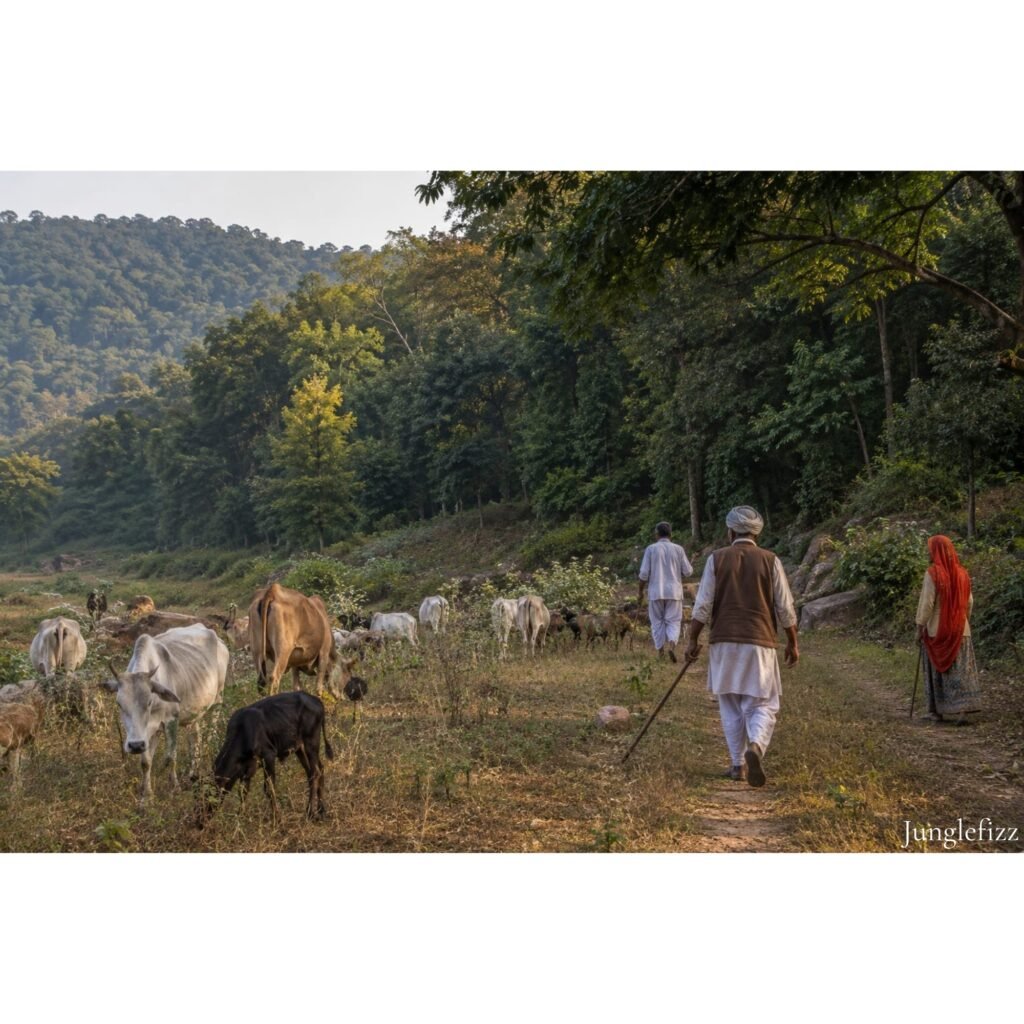
There are strict restrictions on human activities in the core or critical tiger habitat of a Tiger Reserve. But many human activities continue in a controlled manner in buffer and fringe areas.
In some areas around Tiger Reserves, local people have depended on forests and nearby resources for their livestock and other needs for generations.
Sunayan Sharma has described this problem in great detail in his book Sariska: The Tiger Reserve Roars Again.
There have been many tensions between local people and conservation authorities around Sariska. Villagers depended on the forest for their livestock.
Local politics also made the situation more complicated at times.
It is important to understand that we cannot blame only humans for this conflict.
After all, they also have to earn a living.
For generations, many of them have depended on these forests and their resources for their livestock and other needs.
On the other hand, tigers do not like outside interference in their territory either.
Sometimes villagers and their livestock become victims of tiger attacks.
Human-tiger conflict can sometimes have tragic consequences. According to Union government data reported by India Today, tiger attacks killed 621 people in India between 2014 and 2024, an average of about 60 deaths every year.
The number of deaths increased after 2022 as tiger numbers grew and habitats became increasingly fragmented – Source: India Today
And sometimes tigers are killed by people.
According to NTCA, human-tiger conflict often occurs in the areas around the edges of Tiger Reserves and protected areas.
Compensation, quick action, livestock protection, and the participation of local people are very important to solve this problem.
As conservationist Valmik Thapar once said, “Conservation is impossible without community support.”
Only then can local support for wildlife conservation remain strong.
Tigers, too, sometimes become victims of human activities. Although tigers can die from natural causes, disease, fights and accidents, deaths linked to poaching and illegal wildlife trade remain a serious concern.
According to WPSI records, 52 tigers were recorded under the “poaching and seizures” category in 2025, while 30 such cases have been recorded so far in 2026.
Wildlife Protection Society of India.
2. Connectivity Needed in Tiger Landscapes
Many Tiger Reserves and protected areas in the country appear like islands cut off from nearby forests and wildlife habitats.
But a tiger is not an animal that always stays within the boundary of one reserve.
Young tigers, especially, need to find new territories for themselves.
There are several reasons for this:
- Growing tiger population
- Need for new territories for young tigers
- Dispersal
- Breeding
- Genetic exchange between different tiger populations
Therefore, it is very important to maintain connectivity between Tiger Reserves and suitable habitats around them.
If wildlife corridors remain safe, tigers have a route to move into new areas.
This prevents tiger populations from becoming isolated.
It can also improve their long-term survival across the landscape.
3. Roads, Railways and Wildlife Corridors
Roads and railway lines also pass through many tiger landscapes.
Traffic keeps moving through these areas day and night.
This can create problems for wildlife movement.
Sometimes animals are hit by vehicles or trains while crossing roads or railway lines.
But development cannot be stopped everywhere.
That is why work is now being done on wildlife-friendly infrastructure.
Several methods are being used for this.
Wildlife Overpasses
Wide bridges are built over roads. Many of them are covered with vegetation.
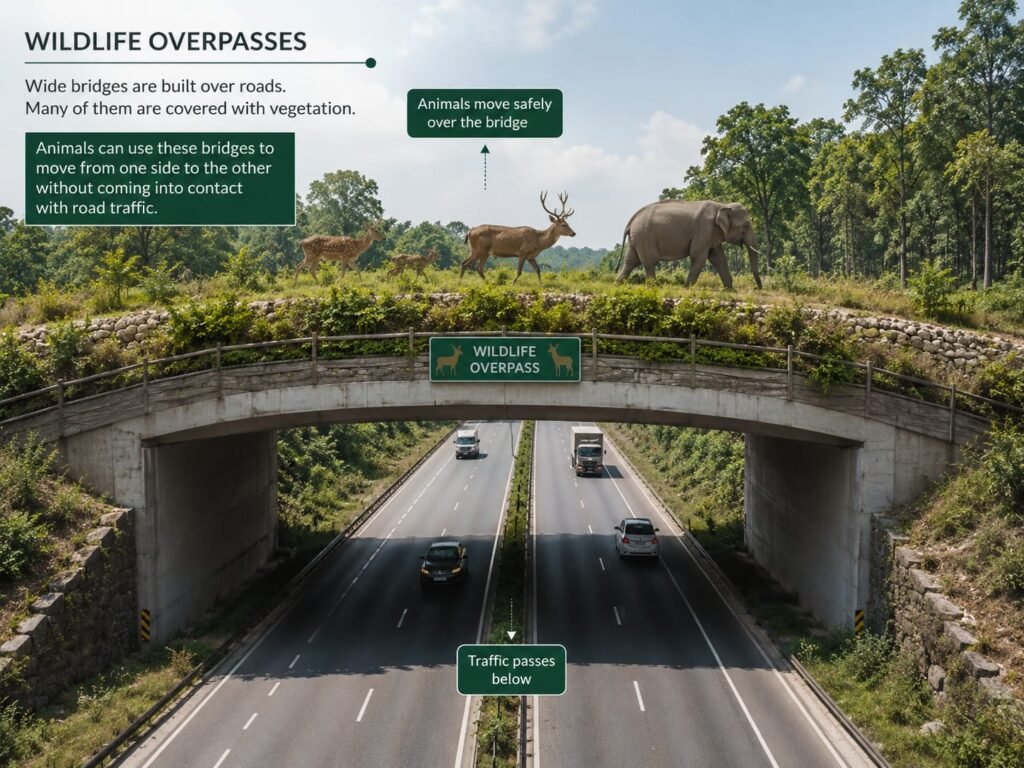
Animals can use these bridges to move from one side to the other without coming into contact with road traffic.
Underpasses and Culverts
Wildlife passages are built under roads or railway lines.
Their size and design depend on the species they are meant for.
Small culverts can be useful for smaller animals.
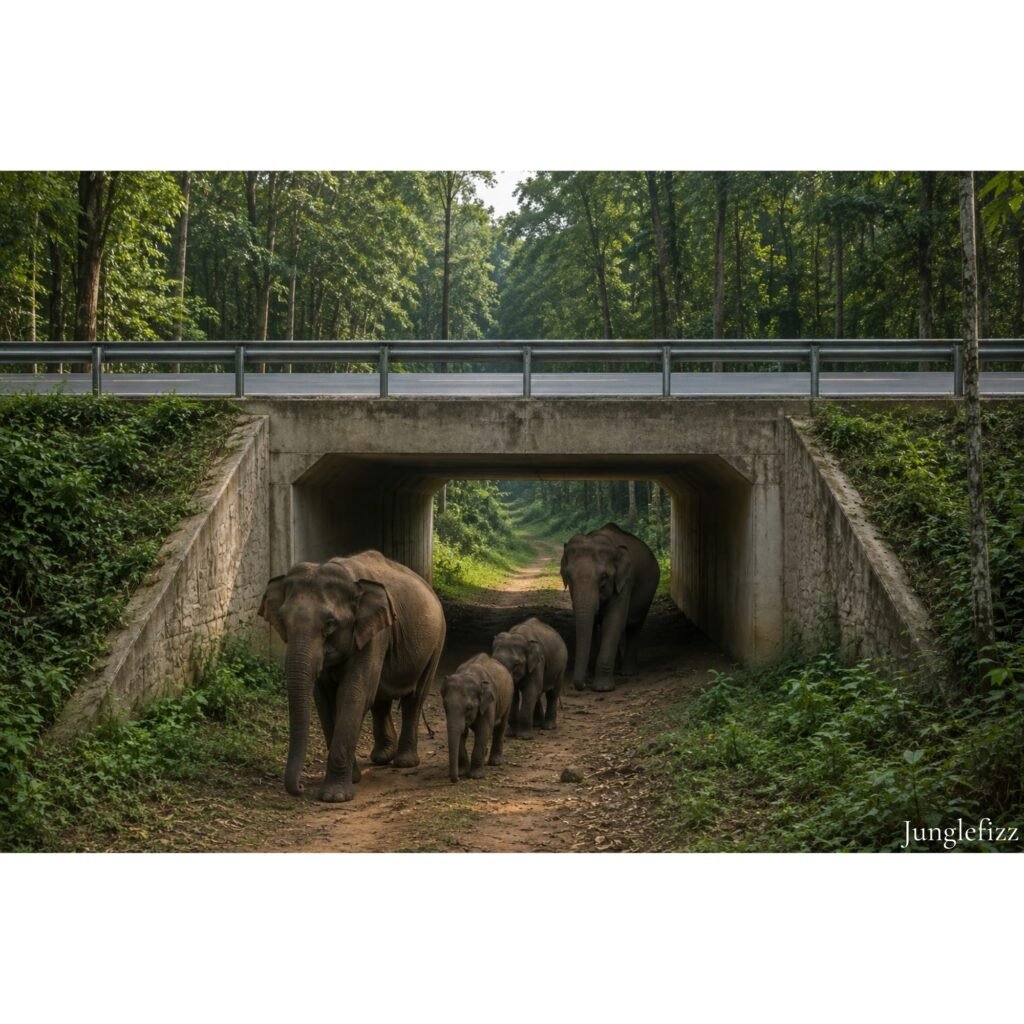
Large underpasses can also be used by large mammals such as tigers, leopards and elephants.
Monitoring of nine wildlife crossing structures on NH-44 through Pench Tiger Reserve found that 18 species used them. Tigers were among them. In 2019, 11 individual tigers were recorded making a total of 89 crossings through six of these structures.
Elevated Roads / Viaducts
In some sensitive areas, roads are built above the ground.
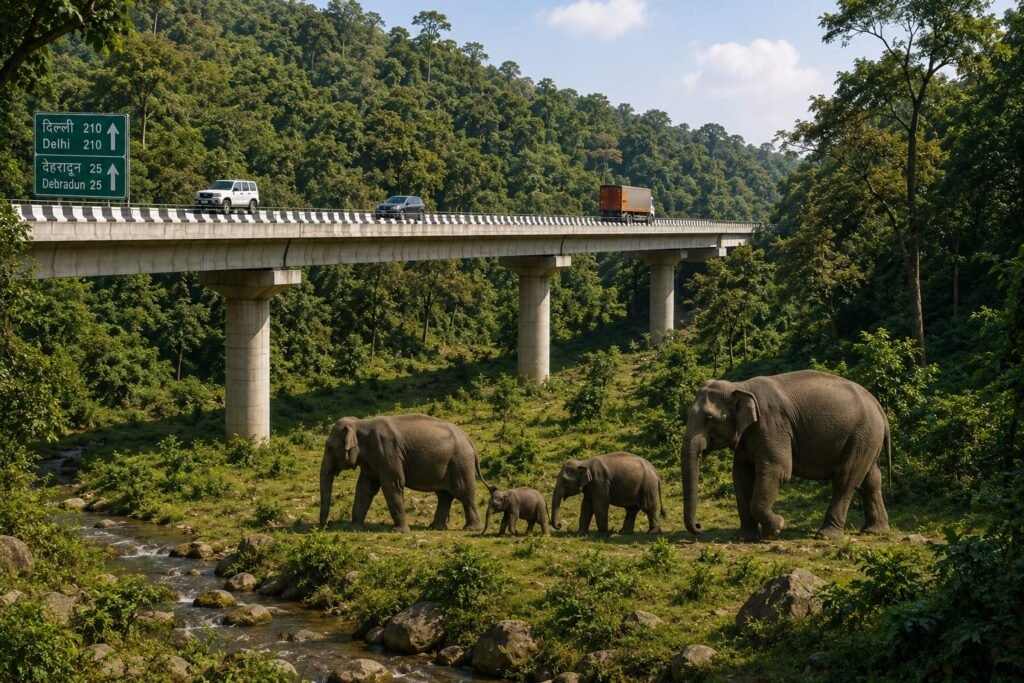
Traffic passes over the forest.
Wildlife can continue to move below the road.
In this way, roads and wildlife movement can share the same landscape.
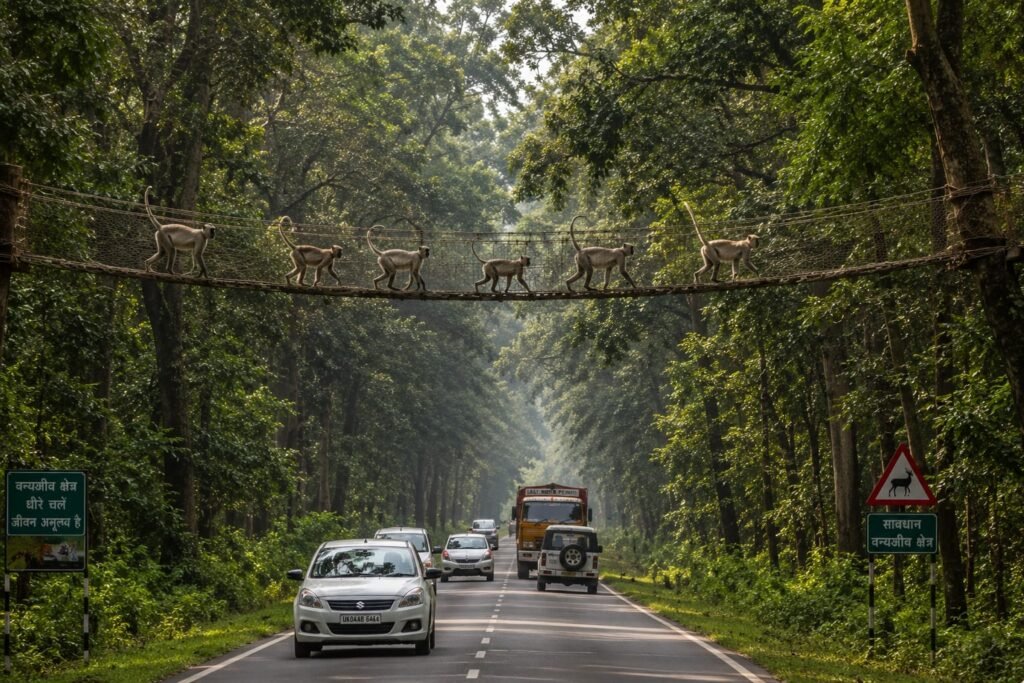
Canopy Bridges
These are bridges built between trees on both sides of a road.
Monkeys, langurs and other tree-dwelling animals can use them.
Speed Regulation and Fencing
Speed limits are imposed in some areas.
Fences are also used at some sensitive locations.
The aim is to stop animals from entering the road and guide them towards safe crossing points.
Speed control, fencing and designated animal crossings are some of the methods used to reduce wildlife-vehicle collisions.
In India, NTCA, MoEFCC, WII and other agencies are working on wildlife-friendly infrastructure.
Pench is a good example of wildlife crossings.
The Rajaji landscape is another important example, with an elevated road and other wildlife protection measures.
4. Tourism Pressure
Tiger tourism provides economic and social support for wildlife conservation.
The craze for jungle safaris is also growing.
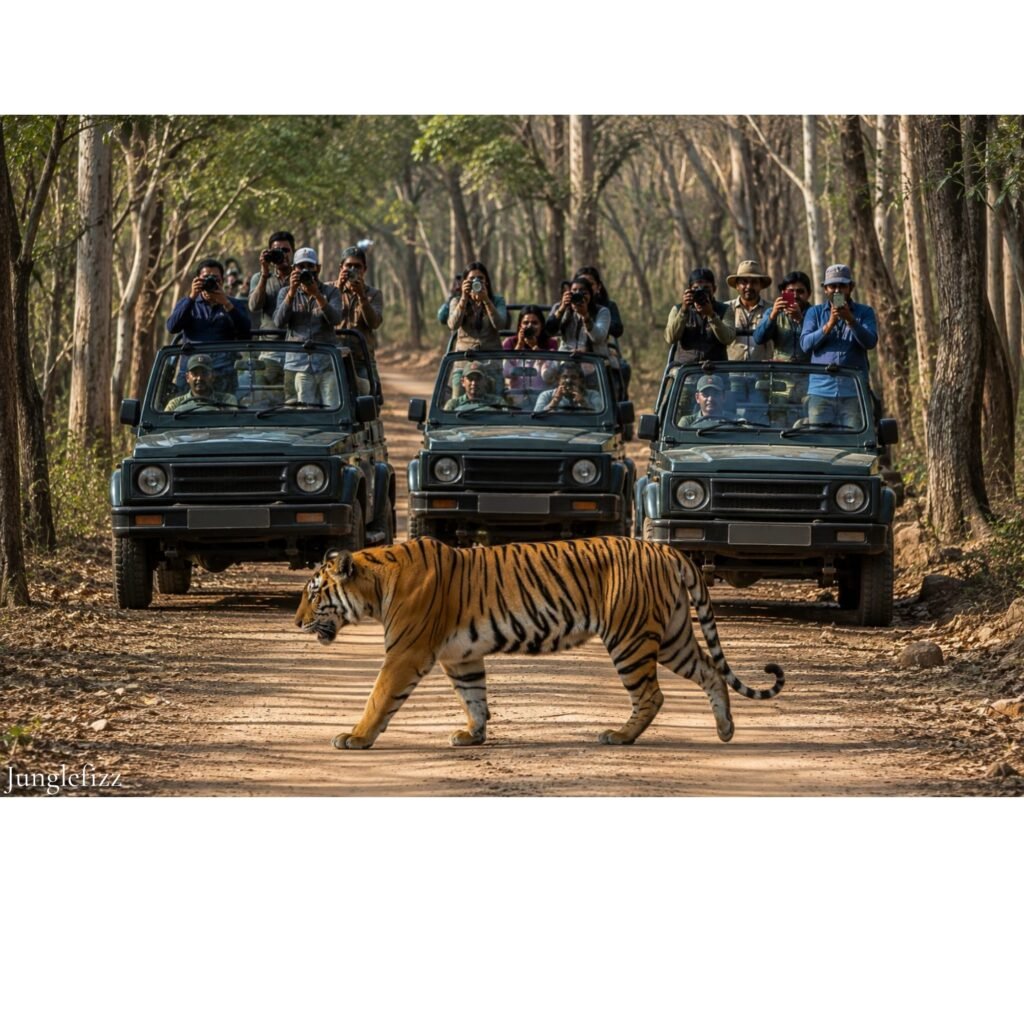
But uncontrolled tourism can become a problem for wildlife.
Too many vehicles and traffic can increase noise.
Infrastructure development can also increase in some areas.
This can disturb wildlife.
Therefore, tourism should be kept within the carrying capacity of the area.
Unnecessary development should also be limited in sensitive areas.
In 2025, the Supreme Court issued important directions on ecological safeguards related to Tiger Safaris.
The Court made it clear that Tiger Safaris should not be allowed in core or critical tiger habitats. It also laid down several conditions for such activities in buffer areas.
5. Prey Base and Habitat Quality
A Tiger Reserve is not just a forest.
It is a forest where enough prey is available for tigers.
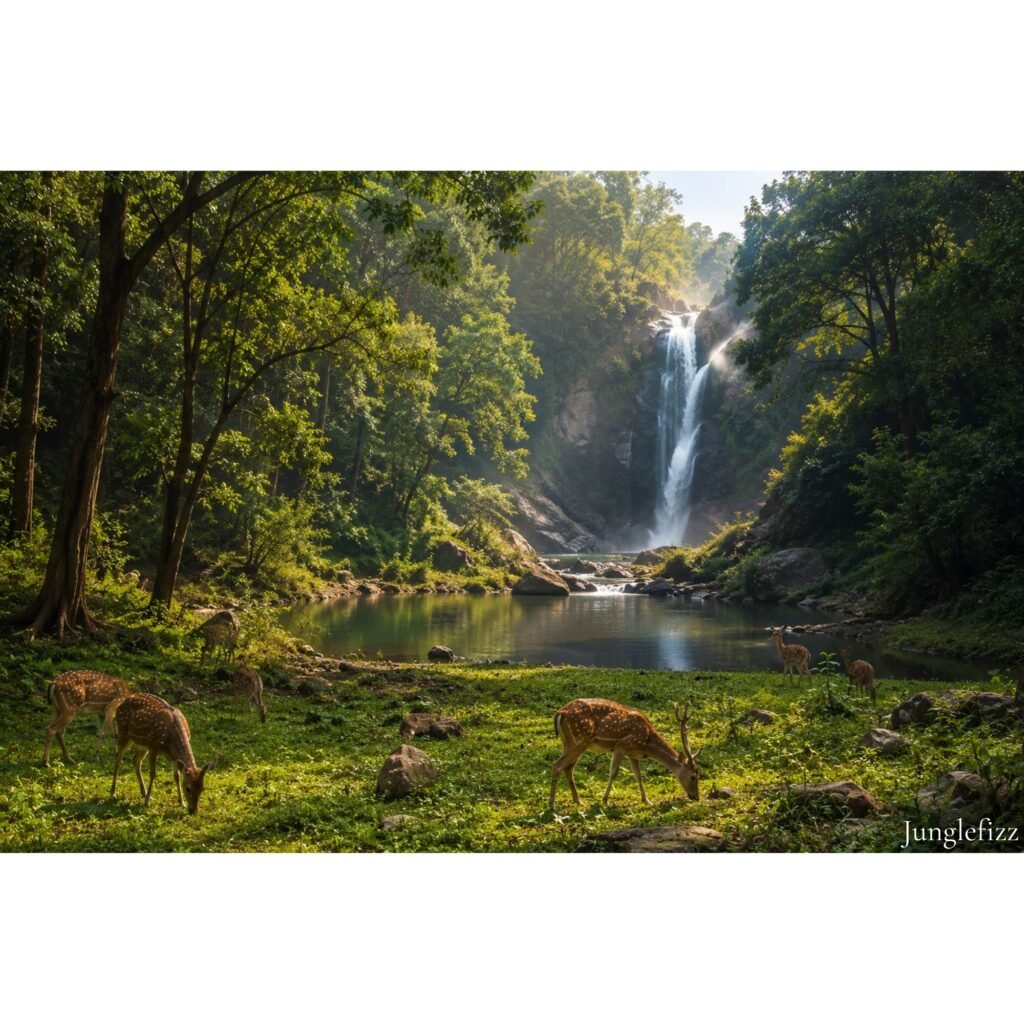
If the natural prey base becomes weak, the chances of tigers killing livestock and coming into conflict with people can increase.
Therefore, Tiger Reserves need healthy populations of prey species such as spotted deer, sambar, wild boar, and gaur.
These prey species also need a healthy ecosystem to survive.
- They need forests.
- They need water.
- They need grasslands.
And they need safe habitats.
That is why tiger conservation is really about conserving the whole ecosystem.
6. Invasive Species – Lantana camara
Lantana camara is an invasive and toxic plant that has spread across many Indian forests, including Tiger Reserves.
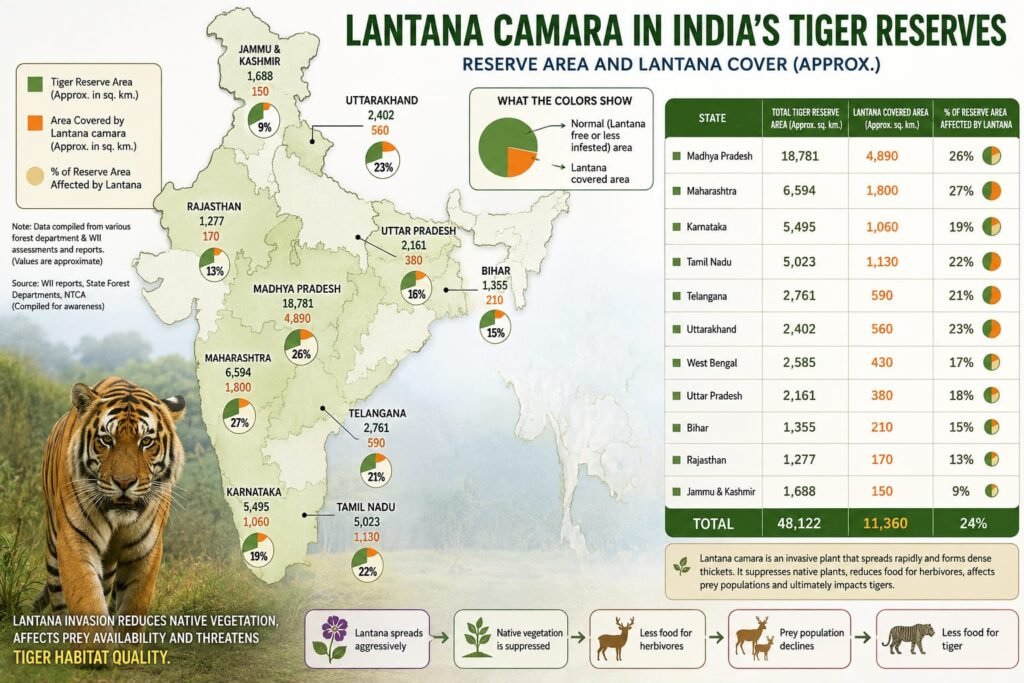
It grows rapidly and forms dense thickets, restricting the growth of native plants and reducing grazing and browsing opportunities for herbivores.
This can affect prey populations and, in turn, reduce the food available to tigers. The scale of the problem can be seen in Bandipur Tiger Reserve, where WII reports that the entire 876 sq km core area is infested with Lantana, with 38% covered by high-density growth.
Different Challenges in Different Tiger Reserves
The problems discussed above are faced by most Tiger Reserves in one form or another.
But every reserve also has its own special conditions.
Its geography is different.
Its landscape is different.
And its problems can also be different.
Let us look at some examples.
Jim Corbett–Rajaji Landscape
Jim Corbett and Rajaji are both in Uttarakhand.
There is important wildlife connectivity between the two landscapes.
Elephants and other wildlife species move through this landscape.
So, the challenge is not simply to create a new corridor.
The challenge is to protect existing wildlife corridors and landscape connectivity from roads and other infrastructure projects.
Maintaining this connectivity is very important for long-term conservation.
Ranthambore
Ranthambore has been successful in increasing its tiger population.
But space and dispersal are now becoming more important issues.
Young tigers need separate territories.
They may move out of the reserve in search of new areas.
Therefore, it is important to protect the corridors and surrounding forests connected to Ranthambore.
The good news is that in recent years, tigers from Ranthambore have been seen naturally moving into other landscapes.
This shows that tiger conservation cannot remain limited to the boundary of a reserve.
Kaziranga
Kaziranga faces a different kind of challenge.
It is located in the floodplain of the Brahmaputra River in Assam.
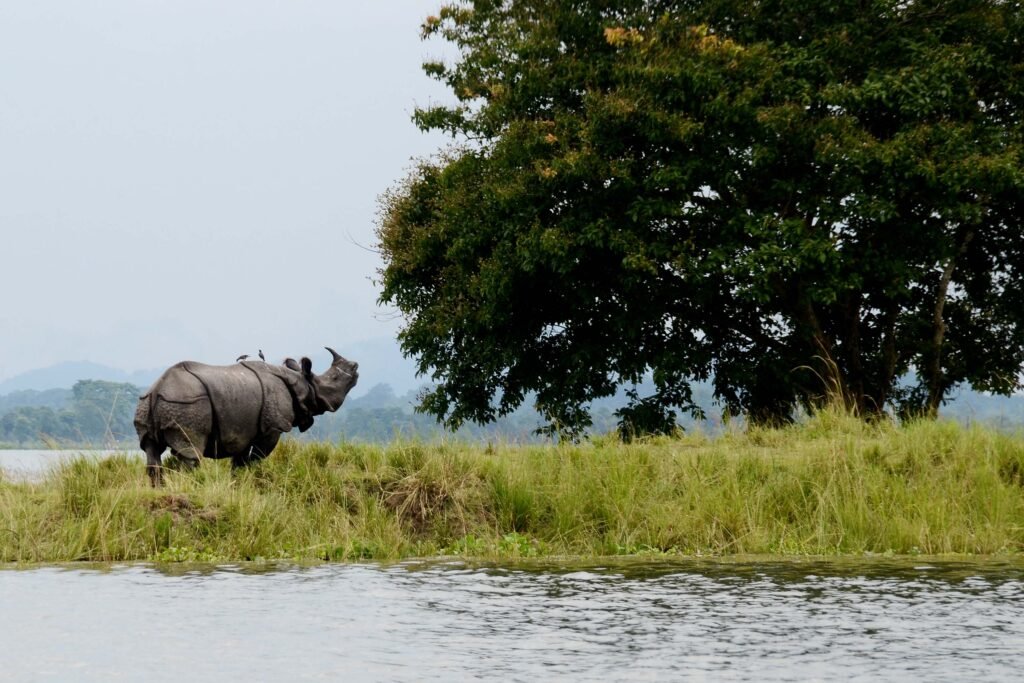
During the monsoon, the water level of the Brahmaputra and its tributaries rises, causing seasonal floods.
Flooding is a natural part of this ecosystem.
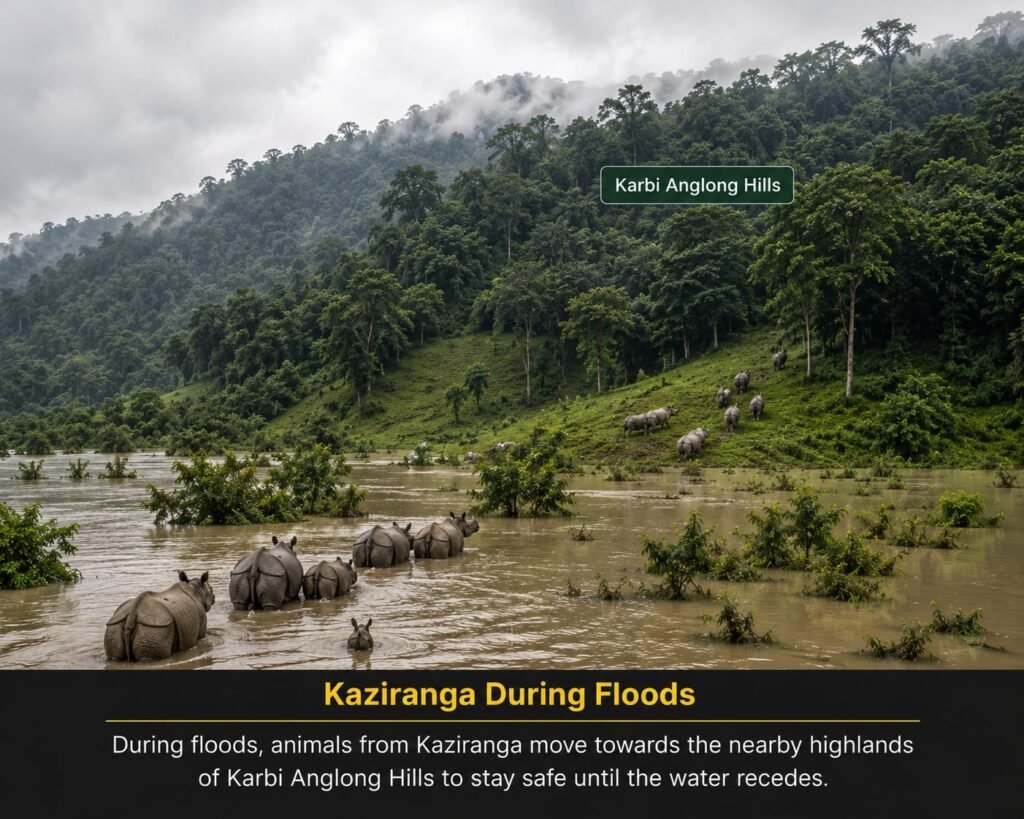
It plays an important role in maintaining grasslands, wetlands, and aquatic habitats.
But extreme floods can become a problem for wildlife.
During such times, many animals move towards higher ground.
The Karbi Anglong Hills, located south of Kaziranga, provide important highland refuge for wildlife during floods.
But animals have to cross highways at several places to reach these hills.
This increases the risk of road accidents.
The Assam Government has officially identified nine animal corridors between Kaziranga National Park and the Karbi Anglong Hills. These are natural wildlife movement routes. They were not built like roads.
The problem is that highways also pass through these wildlife movement routes.
As a result, animals can be hit by vehicles while crossing the highway.
A major solution is now being developed.
The government is developing the Kaziranga Elevated Corridor.
An elevated corridor of about 34.5 km is planned.
The aim is to allow wildlife to move freely between Kaziranga and the Karbi Anglong Hills.
This is a very good example of how development and wildlife conservation can move forward together.
Conclusion: The Bigger Challenge
India has shown the world that it can increase its tiger population in a relatively short time.
But now we face another major challenge.
Saving only the Tiger Reserve is no longer enough for tiger conservation.
We have to protect the whole landscape.
Here, we are reminded of the conservation philosophy of the famous environmentalist Kailash Sankhala.
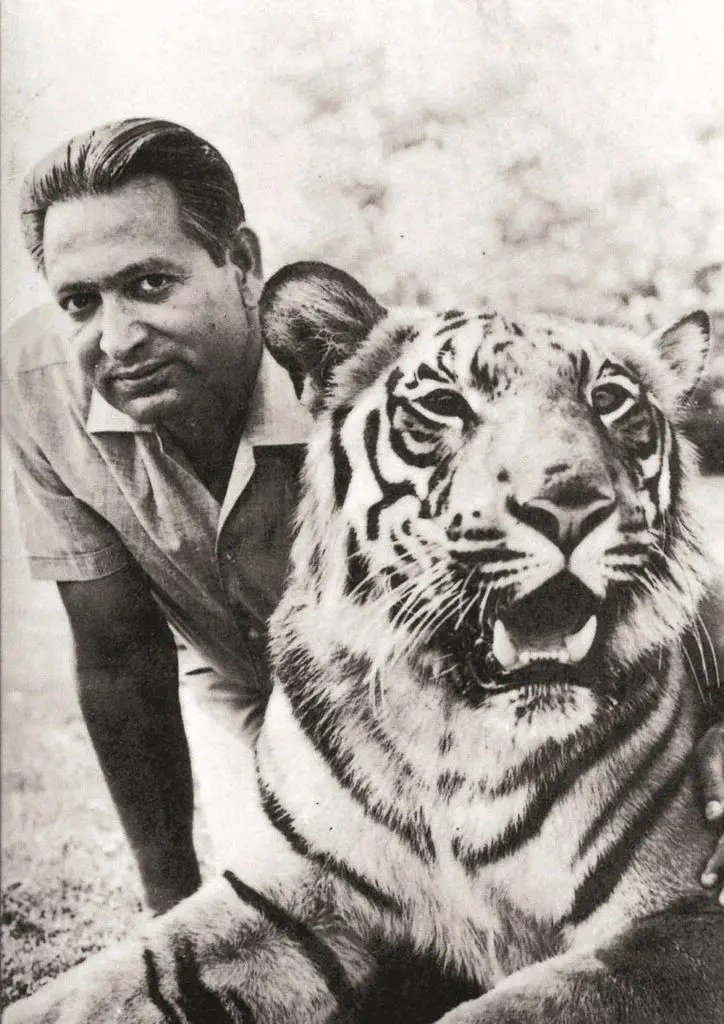
It is easy to kill a tiger, but difficult to save one.
Kailash Sankhala once wrote,
“The tiger cannot be preserved in isolation and if he is to survive the whole habitat must also be preserved”
— Kailash Sankhala
(Reference: Kailash Sankhala, Tiger! The Story of the Indian Tiger, Collins, London, 1978)
Saving a tiger is not just about saving one tiger.
We have to save the whole forest.
We have to protect its habitat.
We have to protect its prey and water sources.
We have to protect its corridors.
And above all, we have to protect the whole landscape where tigers and people live together.
For this, protected areas, wildlife corridors, buffer forests and local communities must all become part of the conservation strategy.
Roads will be built.
Railways will also be built.
Cities and villages will continue to grow.
But we must also leave space for wildlife.
In the coming years, our success will not be measured only by the number of tigers in the country.
We will also have to see whether we are able to provide them with a safe and healthy habitat.
And most importantly, we will have to see how tigers and people can live together without unnecessary interference in each other’s space.
Perhaps this will be the biggest challenge for tiger conservation in the years to come.
To save the tiger, we must save not only the tiger, but its whole world.
Because the future of the tiger and the future of our forests are not separate. And the future of our forests is the future of our coming generations.
